


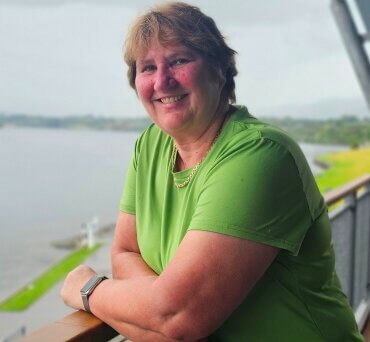
Judith Hamilton at Lake Karāpiro, where she lives and works. Photo: Mary Anne Gill
Judith Hamilton has spent decades shaping some of the country’s finest athletes.

Judith Hamilton
Now, at 58, Rowing New Zealand’s general manager of performance has been appointed an Officer of the New Zealand Order of Merit (ONZM) for services to rowing – something she describes with characteristic understatement as “a bit overwhelming”.
Hamilton has never been one to seek the spotlight. In fact, she’d prefer to talk about almost anything other than herself. But her story is one of quiet determination, technical brilliance and a deep belief in the power of hard work – qualities that have helped cement New Zealand as one of the world’s top rowing nations.
Hamilton grew up in Linden, north of Wellington, and attended Tawa College where she started rowing at the Porirua club.
When she left school she joined the Star Club in Wellington – she is now a life member – and represented New Zealand at junior and under‑23 level.
She was part of a women’s eight which today would have travelled overseas to compete, but back then the emphasis was on the men, so most of Hamilton’s competitive rowing was trans‑Tasman.
Coaching came almost by accident. After she retired from competitive rowing in her early twenties, former crewmates pestered her to coach them.
“I kept saying, ‘I don’t know anything about coaching’,” she said. “I relented.”
That summer, her crew won a national title – and Hamilton was hooked.
Her coaching career accelerated quickly. She became Rowing New Zealand’s first female elite-level coach in the 1990s, led the junior national team, and later took on regional and national roles that shaped the next generation of talent.
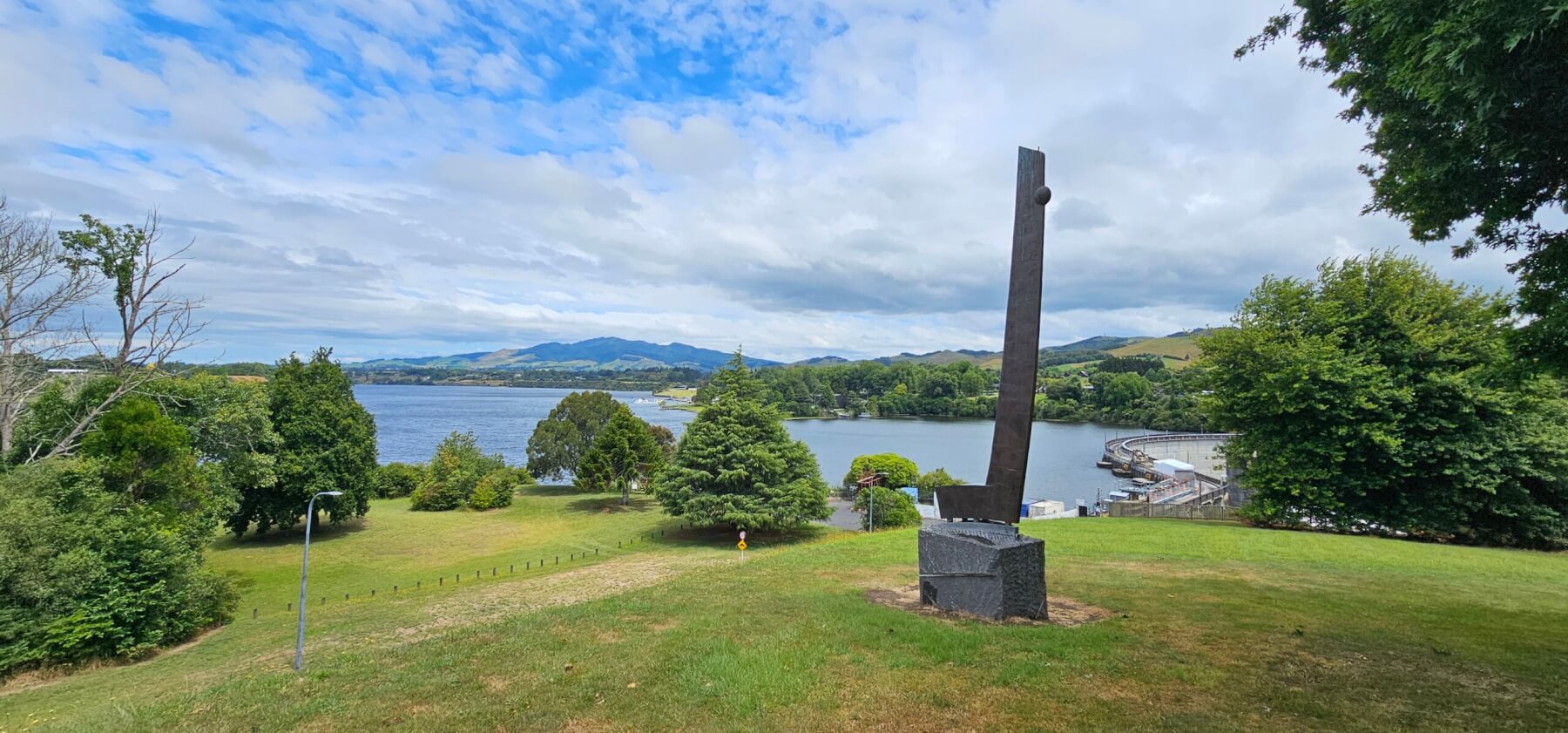
Lake Karapiro
In 2018, she became the organisation’s first female High Performance Director, overseeing the programme that delivered New Zealand’s most successful Olympics in Tokyo.
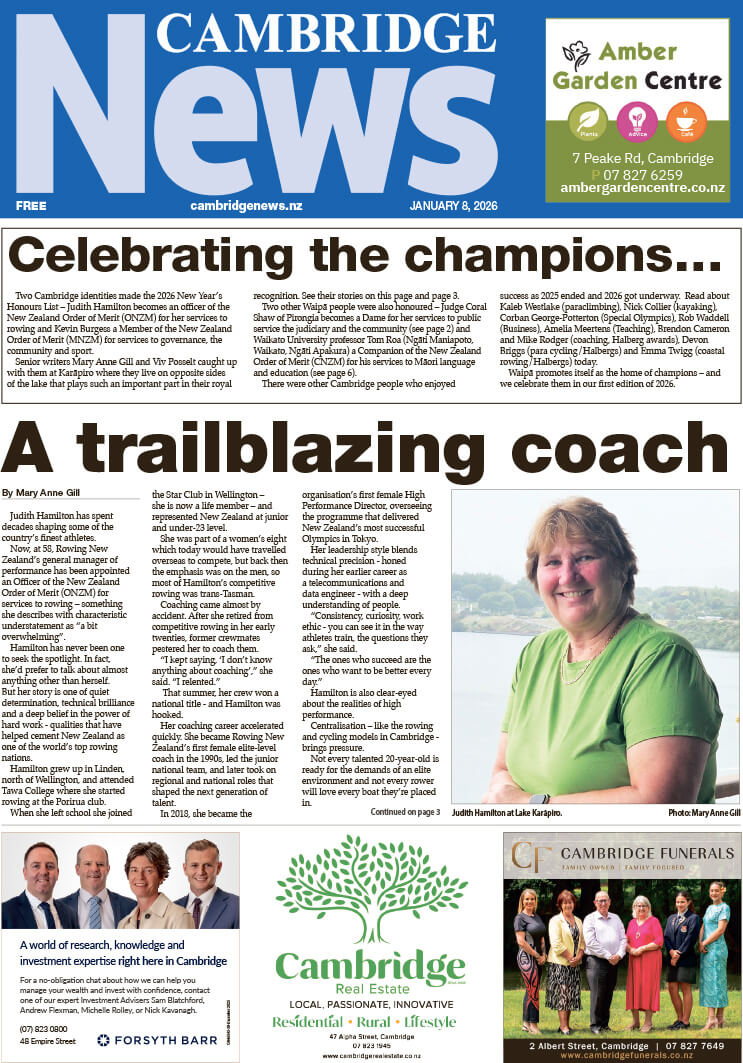
Cambridge News 8 January 2026
Her leadership style blends technical precision – honed during her earlier career as a telecommunications and data engineer – with a deep understanding of people.
“Consistency, curiosity, work ethic – you can see it in the way athletes train, the questions they ask,” she said.
“The ones who succeed are the ones who want to be better every day.”
Hamilton is also clear‑eyed about the realities of high performance.
Centralisation – like the rowing and cycling models in Cambridge – brings pressure.
Not every talented 20‑year‑old is ready for the demands of an elite environment and not every rower will love every boat they’re placed in.
“They don’t have to be best friends, but they do need respect – for each other’s strengths, for the work, for the goal.”
Despite her senior role, she still sees herself as part of a wider system – selectors, coaches, administrators and families.
“Parents are huge. It’s not just the cost. It’s the 5.30am drives, the commitment.”

Rowers competing at Lake Karapiro. Photo – Art of Rowing / Rowing NZ.
Away from the lake, Hamilton is surprisingly hands‑on. She has a workshop at home in Maungatautari, where she and partner Sandy built their house overlooking Lake Karāpiro.
Woodworking is her escape.
“I watch YouTube videos and just build stuff,” she said.
Her latest creation is a Cape Cod chair; next on the list is a bench for the outdoor table. She has also, sporadically, tried to learn the drums.
“I’m very much a novice. I probably haven’t picked up the sticks in a while.”
These quirks – the shed, the tools, the drum kit – paint a picture of someone who values craft, rhythm, and patience. It’s not hard to see the parallels with rowing.
Hamilton is now focussing on the long build toward the 2028 Los Angeles Olympics, where New Zealand hopes to add to its formidable medal legacy and contest the new beach sprint rowing event.
But for now, she is still processing the honour that prompted all this reflection.
“It’s pretty special,” she said.
“I’m just grateful for the people I’ve worked with – and for the ones who believed in me.”
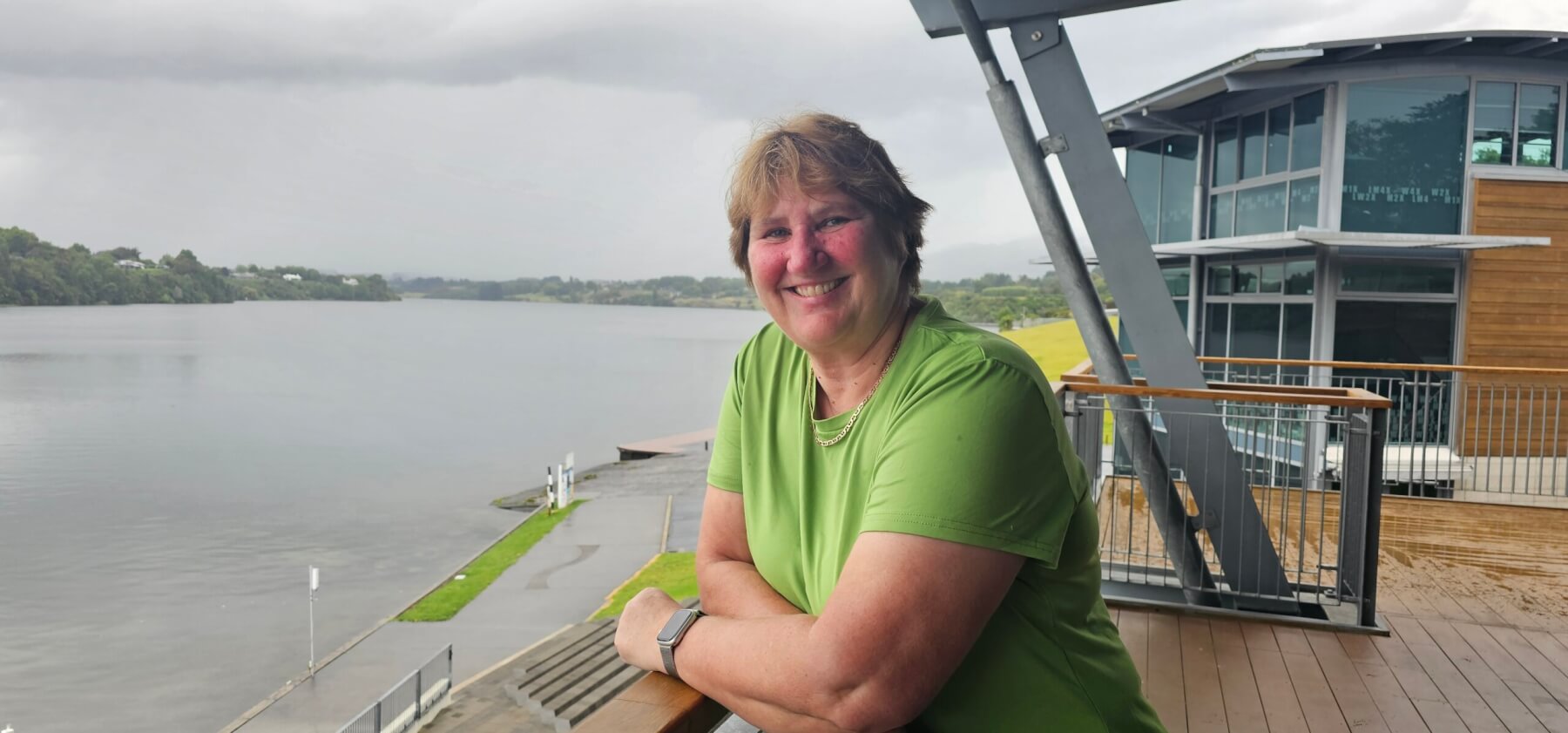
Judith Hamilton at Lake Karāpiro, where she lives and works. Photo: Mary Anne Gill