


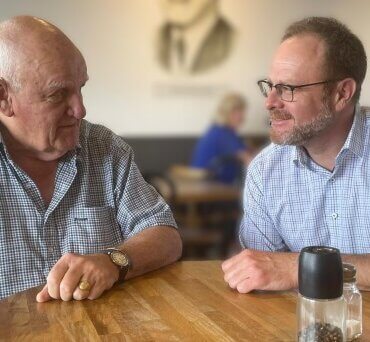
Peter Carr, left, with Chris Flatt
The Waikato River has been compared to a wall which divided a German city in the way it separates Cambridge from Leamington.
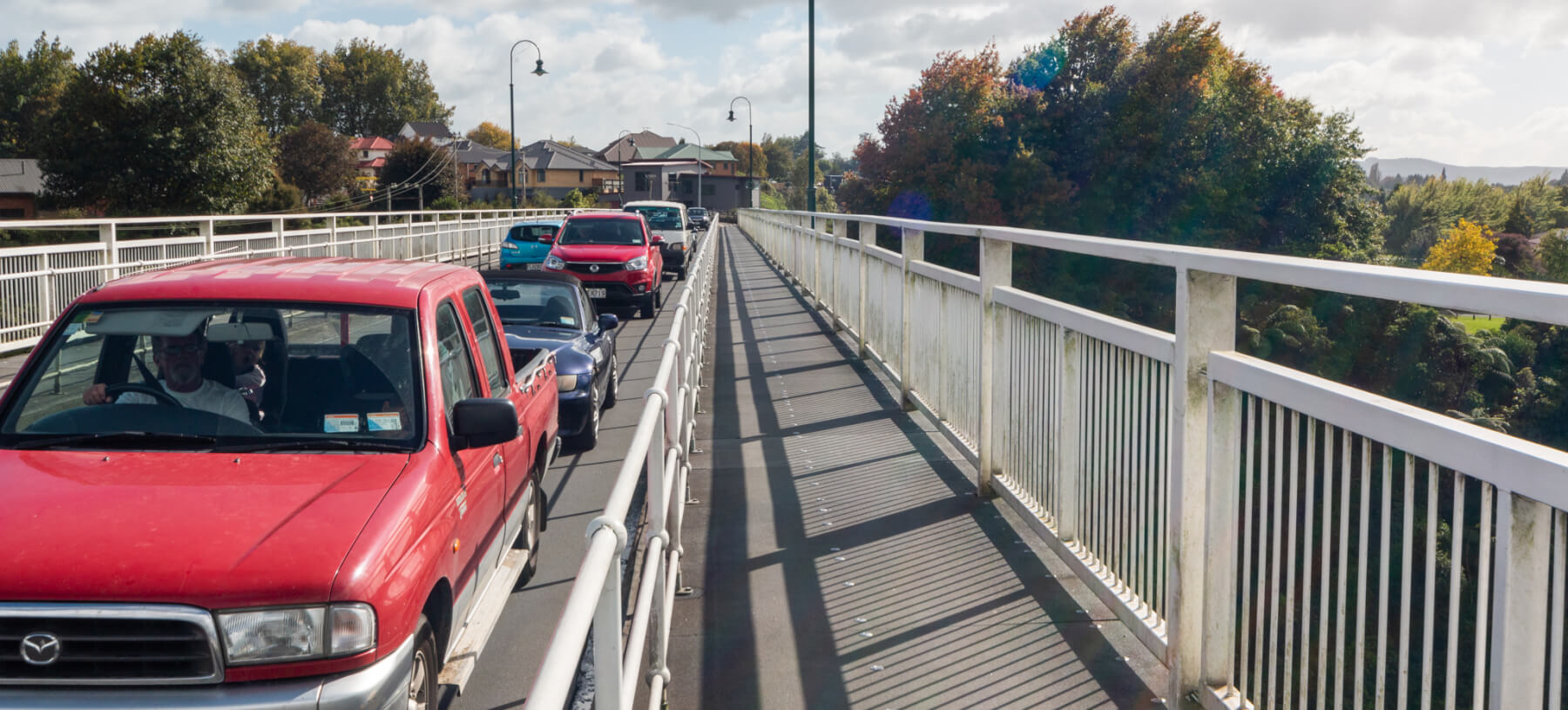
The queue coming from Leamington across the High Level Bridge
The comparison was made by Waipā District Council Cambridge Connections Transport Plan Community Reference Group co-chair Peter Carr.
“That river is like the Berlin Wall,” he said. “More than half the population lives the other side of the river.”
Carr said the Leamington side of the river was woefully under supported by schools and supermarkets. The problem added to the number of people who crossed the river each day and it contributed to congestion.
“There’s some discussions that need to be had outside of our control,” said co-chair Chris Flatt.
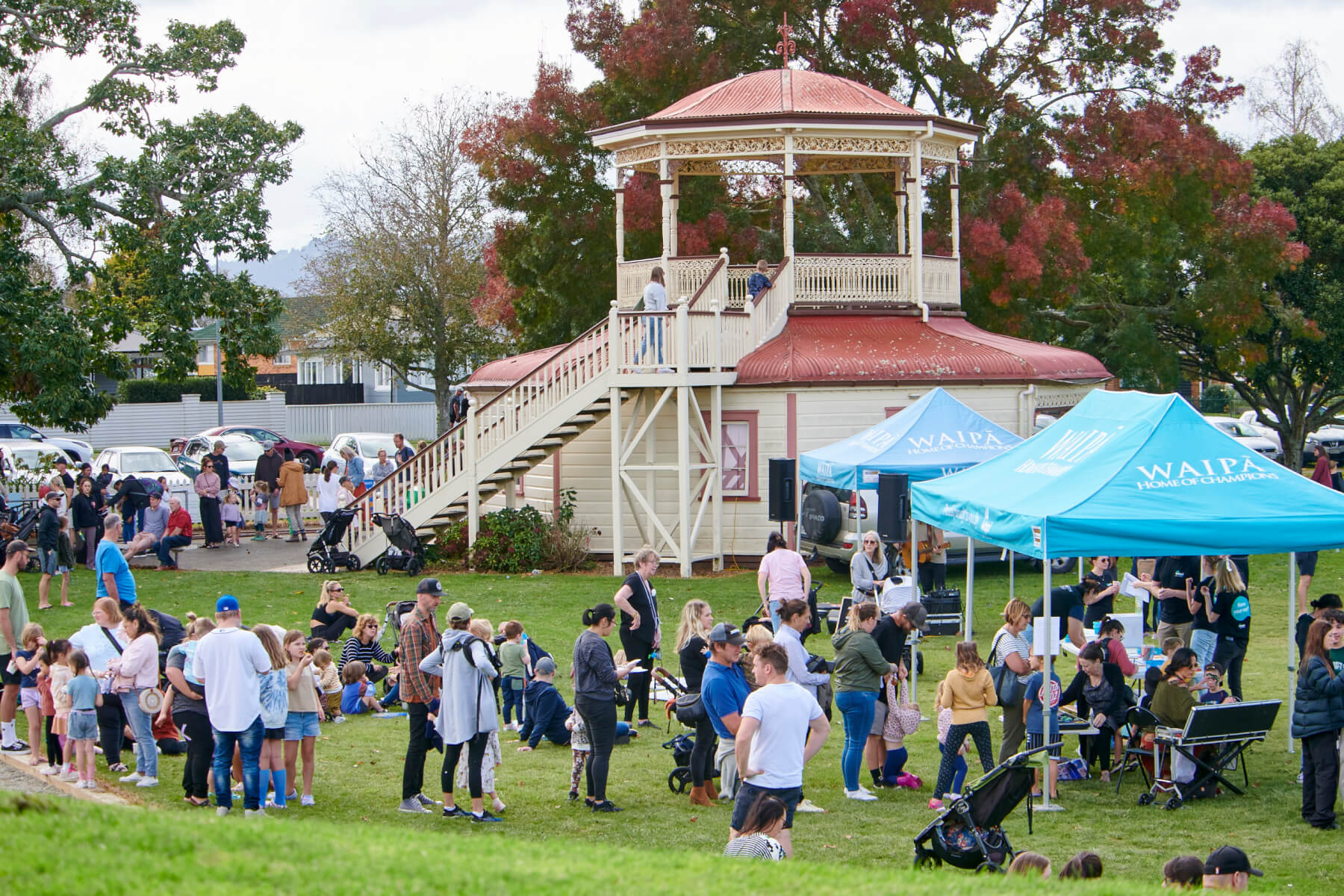
Leamington Domain
That conversation involved building more schools and supermarkets to keep up with population growth and decrease the number of river crossings.
Flatt lives in the area known as the Blue Blob, the river crossing corridor identified by the council that caused a public outcry.
“When we are talking about Cambridge, are we also talking about Leamington, as to me they are both the same. If we don’t have a discussion on this, we are not going to come up with a holistic solution,” Flatt said.
Carr and Flatt joined The News for coffee in Cambridge.
Both men are a month into their roles as co-chairs of the group established as part of the council’s reset Cambridge Connection project.
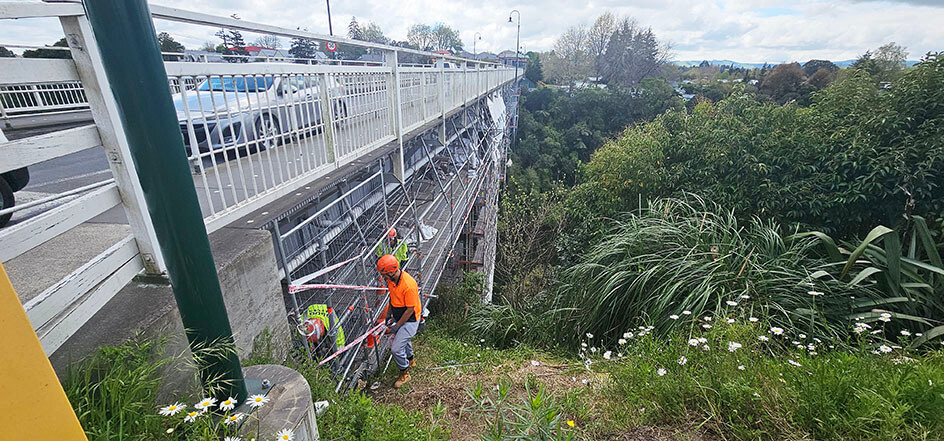
Contractors erect scaffolding at the Leamington side of the historic Victoria Bridge. Photo: Mary Anne Gill.
The News columnist Carr, a former National Fieldays Society president, is a retired seaman who lives in Leamington and moved to the area 20 years ago, while Flatt is the national secretary of the NZ Dairy Workers’ Union and deputy chair of Trust Waikato.
Their job, with fellow forum members, is to ensure community perspectives are heard during the planning and decision-making process on the project. Their role is advocacy, but they have no decision-making power.
They have already collected enough feedback to fill a room.
“It’s valuable. Some of it are gems,” Flatt said.
“There’s a whole bunch of disproportionate views out there, some absolutely incompatible,” Carr said.
“There’s a whole bunch of stuff that can be done, some of which could be done today, some in a couple of years, some long-term stuff.”
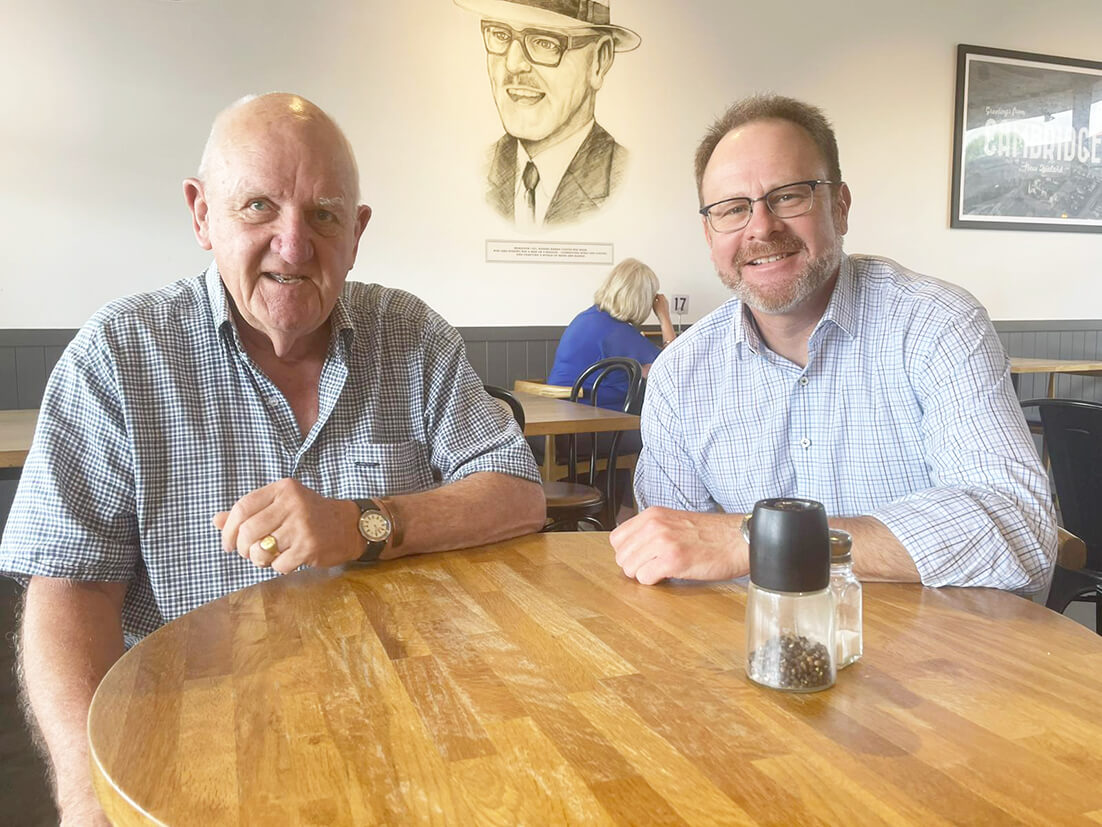
Peter Carr, left, with Chris Flatt. Photo: Chris Gardner.