

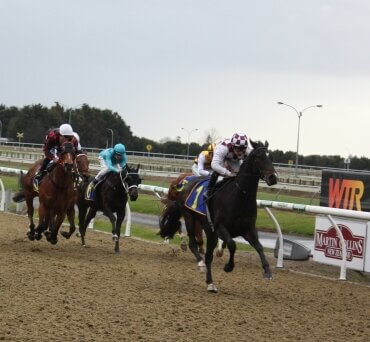
Waikato Thoroughbred Racing Cambridge Synthetic Track.
The search for a greenfield site to house Waikato’s racing industry appears to have narrowed to land immediately south of Hamilton – and an announcement understood to be only days away.
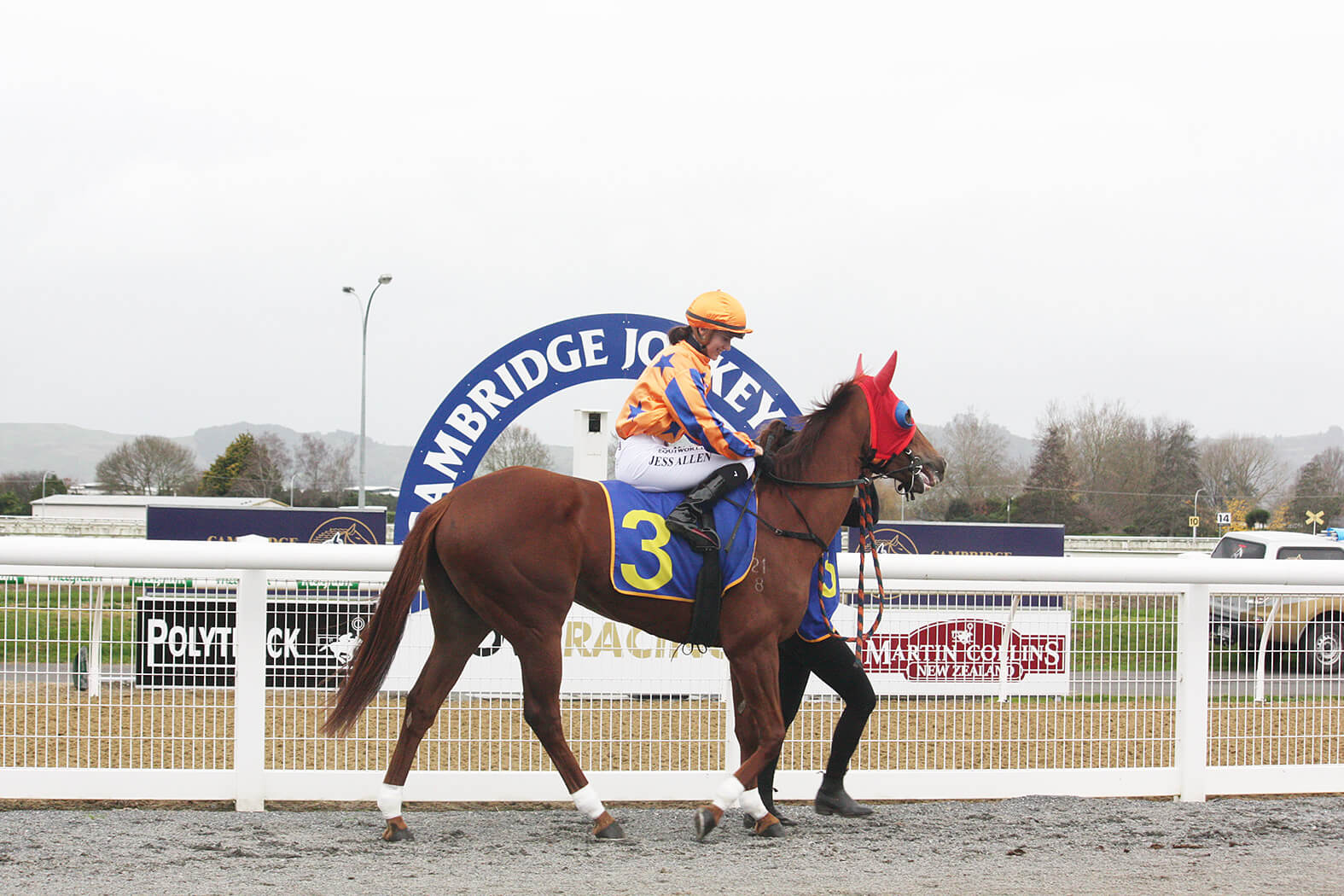
Cambridge apprentice jockey Jess Allen, aboard Kai on the Cambridge Jockey Club’s synthetic track. Photo: Mary Anne Gill.
Waikato Thoroughbred Racing chief executive Andrew “Butch” Castles declined to comment citing the sensitivity of ongoing negotiations.
“I can’t be clearer — it is very delicate and I am not in a position to comment,” he said.
Industry sources suggest agents acting for the club have identified flat land near the Waikato Expressway, capable of accommodating a single, purpose-built hub for racing and training.
This move follows a landmark decision at last year’s annual meeting, where members of the newly merged Waikato Thoroughbred Racing – formed from Te Rapa, Cambridge, and Waipā racing clubs – endorsed a grand plan to sell existing assets and secure a “super site” of between 125 and 200 hectares.
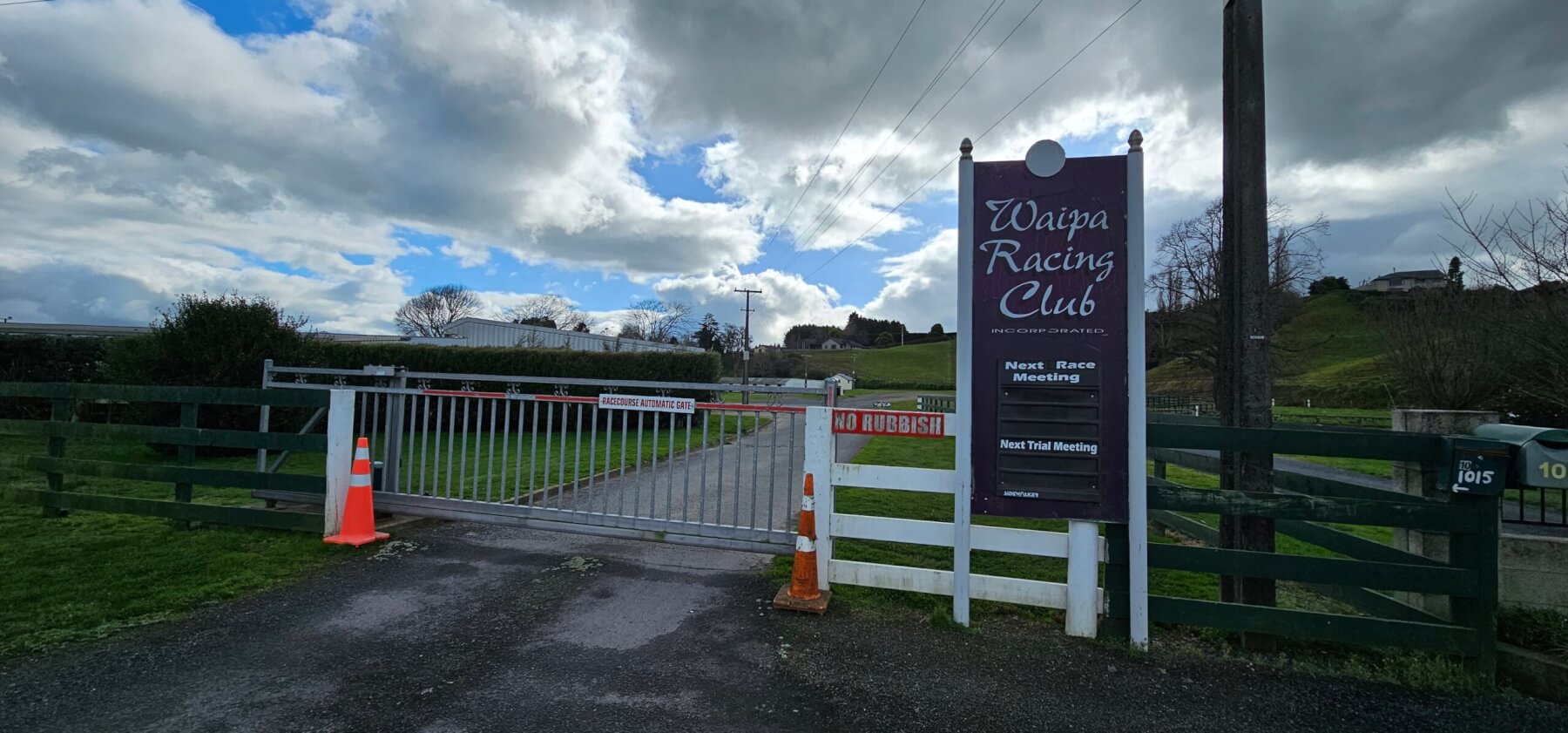
Waipā Racing Club in Te Awamutu. Photo: Mary Anne Gill.
The preferred site needed to sit in a triangle from Hamilton north, down to Te Awamutu, and across to Cambridge, they decided. It needed good access to water, with the right kind of topography and non-peaty.
A new site would eventually replace the racing and training venues in Hamilton, Cambridge and Te Awamutu.
If the purchase proceeds, it would trigger a cascade of property sales, beginning with the 34ha site in Te Awamutu where the Waipā club raced from 1915 until the 2020-21 season and where around 100 horses still train.
Cambridge with 61ha and Te Rapa with 50ha would have to remain operational until the new hub was completed, thought to be by 2035.
The News understands the proposal has high-level government support and would be largely self-funded.
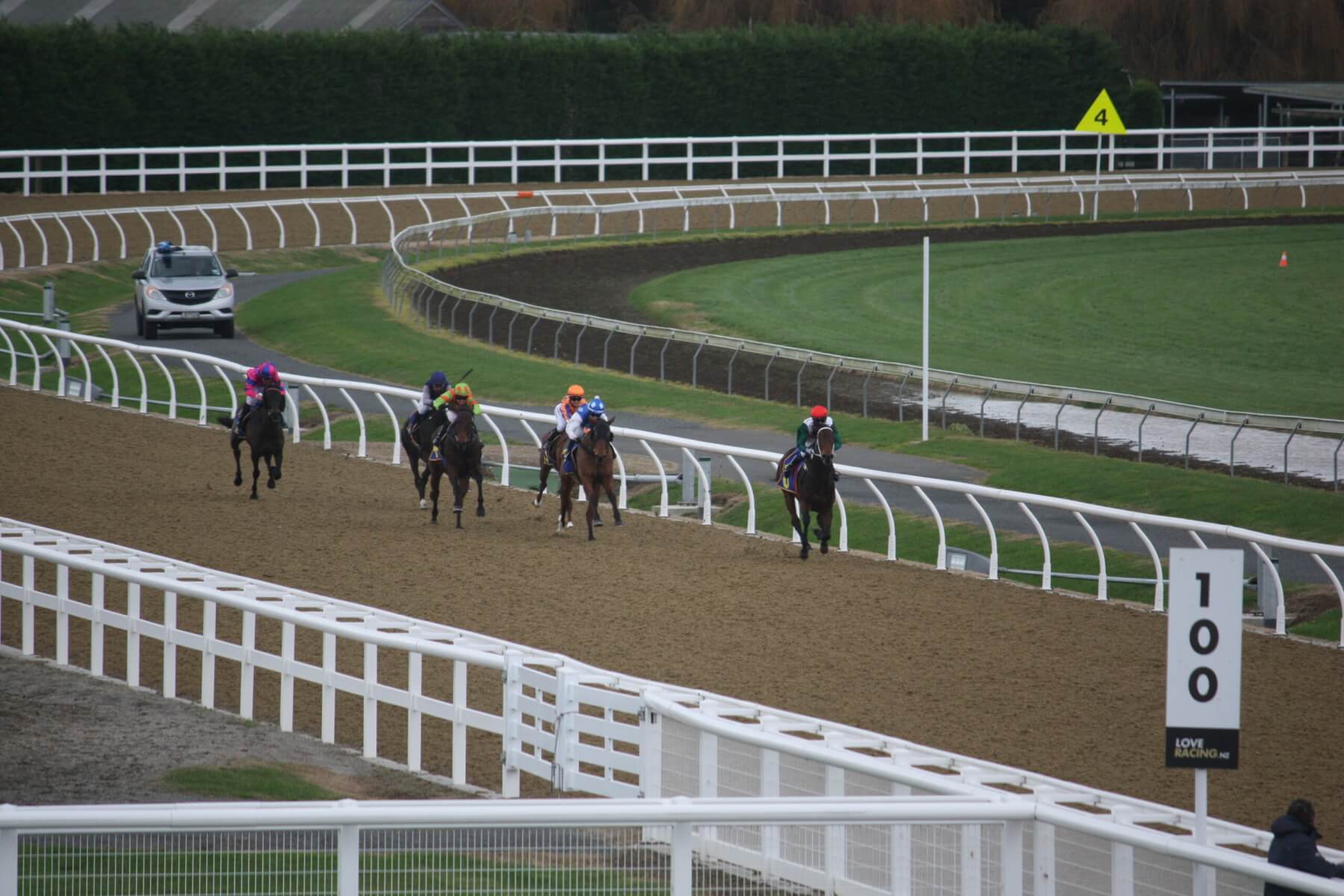
Windspeed leads down the straight with from left: Ima Roca Bee, Darci’s Queen, Mister Roquette, Kai and Stand Tall. Race 6 at Cambridge Jockey Club.
Cambridge – which celebrated its centenary in 2019 – is home to the Southern Hemisphere’s largest thoroughbred training centre, with 1300 horses regularly working on its 13 tracks.
That includes the country’s first synthetic all-weather horse racing track. The Polytrack surface is made from a mixture of silica, sand, carpet fibres, rubber and wax. Its $13 million cost was partly funded by the Provincial Growth Fund and was opened by racing minister Winston Peters in July 2021.
Te Rapa in Hamilton, meanwhile, is Waikato’s premier racecourse and event centre, once spanning more than 150ha during racing’s heydays when thousands of punters flocked to race days. Racing first started on the course in 1924.
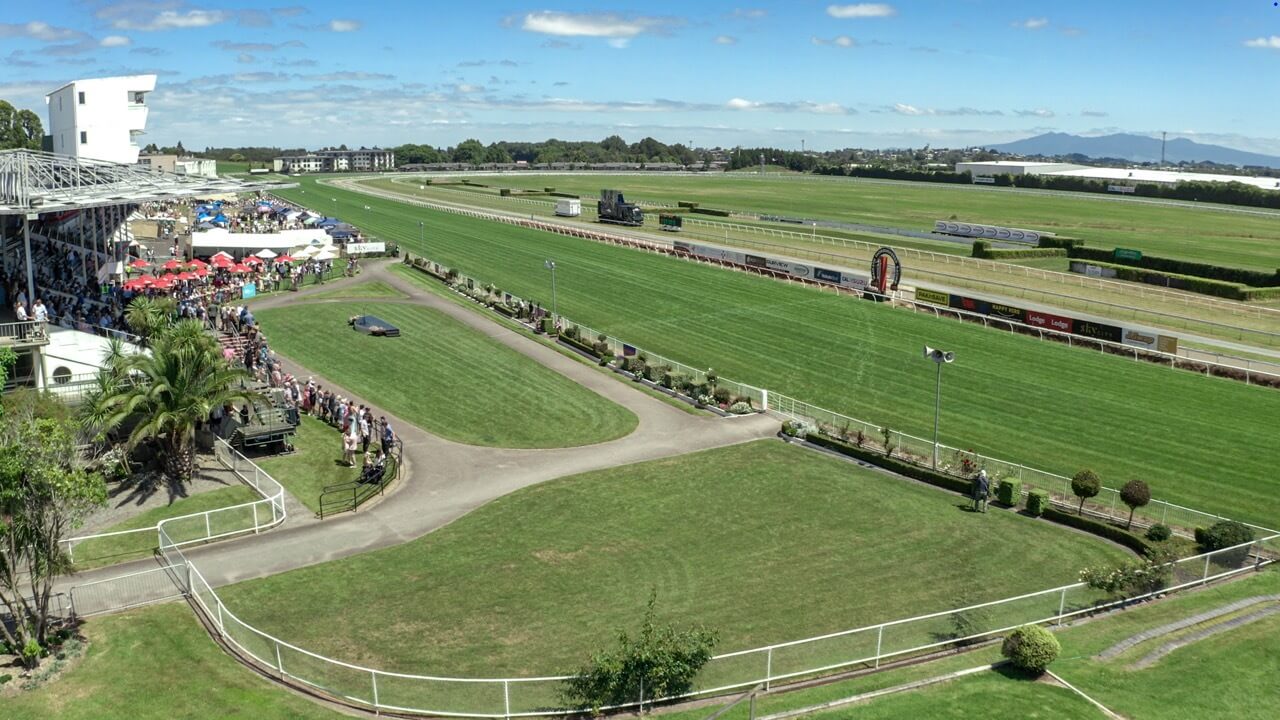
Te Rapa Racecourse
Urban expansion in both Hamilton and Cambridge has steadily encroached on both venues, making the land increasingly valuable for residential and commercial development.

Cambridge News 4 December 2025
The club is hoping to secure a private plan change to rezone 6ha for medium-density housing.
Board chair Bruce Harvey said after last year’s annual meeting a greenfield site would centralise operations and future proof Waikato’s racing industry.
Challenges at Cambridge – where new housing has added traffic to roads used by horses – and the need to bring Waikato’s racing fraternity under one roof were key considerations.
For Waikato Thoroughbred Racing, the solution lies in creating a modern super hub – a facility that secures the industry’s future, provides world-class infrastructure, and ensures the region remains a powerhouse of New Zealand racing.
Trainers would be able to either hire or lease land at the super hub while there would be an opportunity for racing-related ancillary businesses.
The main racetrack would be sand-based but there would also be options for synthetic racing and training tracks.
While officials remain tight-lipped, industry insiders describe the proposal as “exciting” and potentially transformative.
With racing already contributing more than $500 million to the Waikato economy and supporting 3800 full-time jobs, a centralised hub could be the game changer that secures the industry’s future.
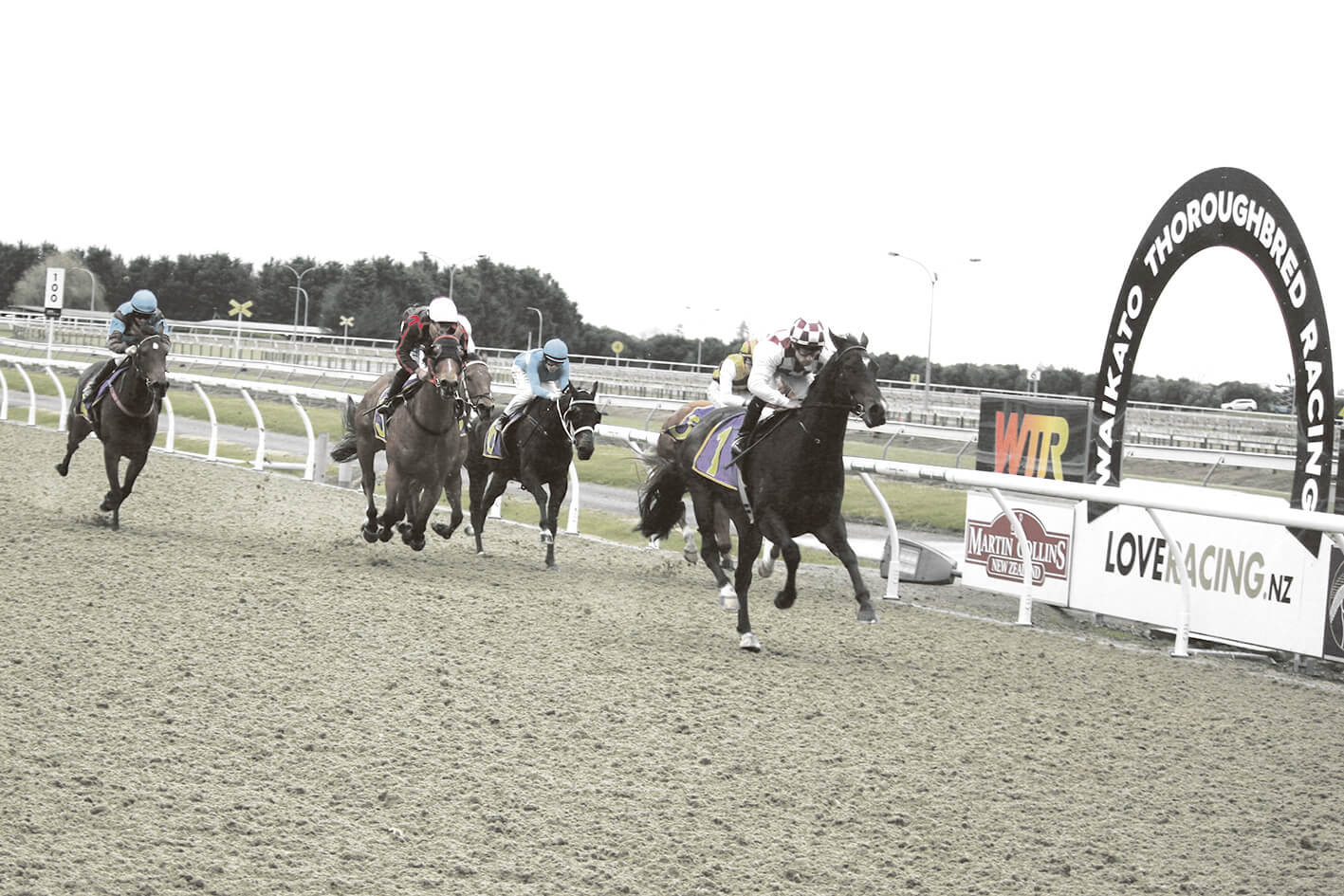
Urban expansion is encroaching on racing venues – such as Cambridge’s synthetic track in Racecourse Rd. Photo: Mary Anne Gill