

Taupo MP Louise Upston, flanked by Hamilton Mayor Tim Macindoe, left, and Universities Minister Dr Shane Reti.
Friday’s groundbreaking ceremony at the site of Waikato University’s new medical school moved a lengthy and sometimes controversial project from a courageous idea into the realm of reality.
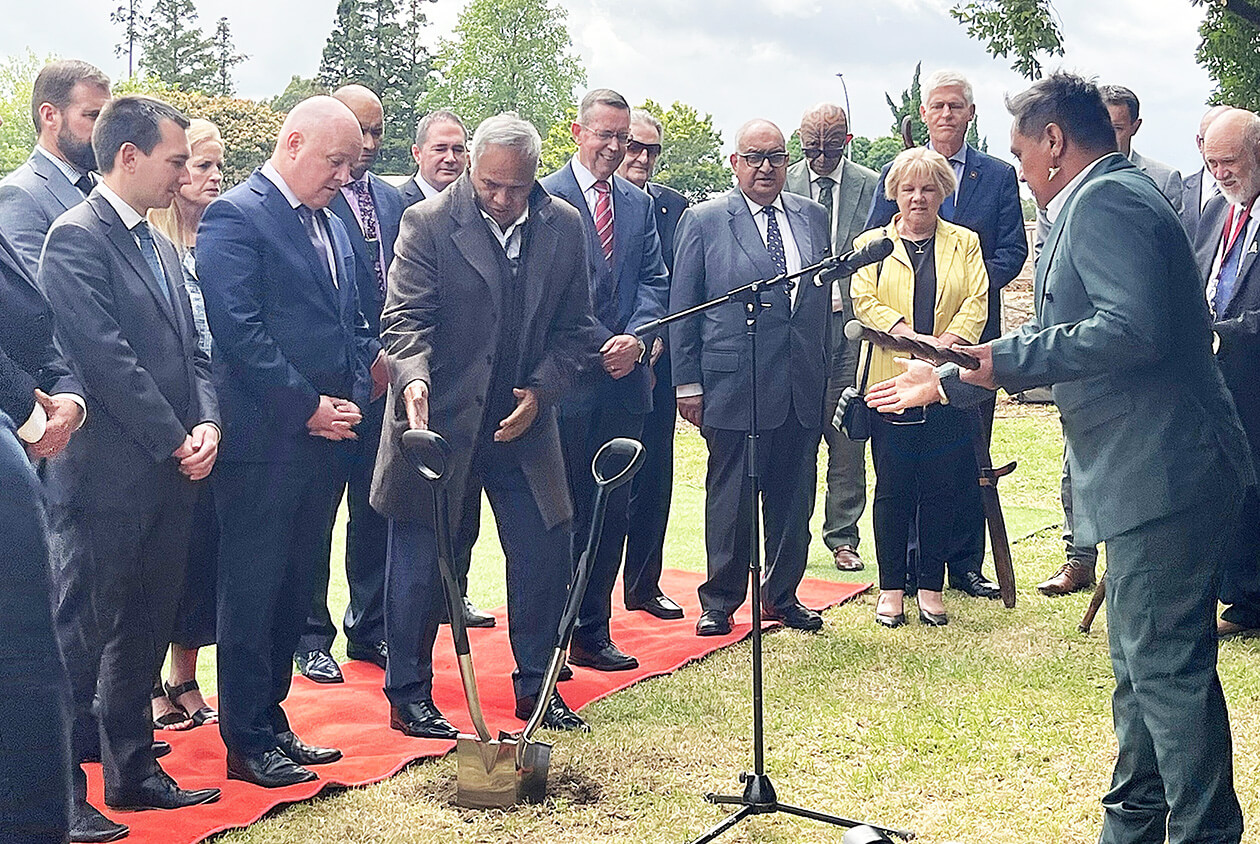
Waikato-Tainui chair Tukoroirangi Morgan gestures to Prime Minister Christopher Luxon to take a spade ahead of last Friday’s sod-turning ceremony at the new medical school at Waikato University. Photo: Viv Posselt
The four-storey $83 million New Zealand Graduate School of Medicine is scheduled for completion in December 2027. It will welcome its first students the following year.
Prime Minister Christopher Luxon and Waikato-Tainui chair Tukoroirangi Morgan shared the task of turning the first sod at the site. They were accompanied by Minister of Health Simeon Brown, Minister for Universities and former health minister Dr Shane Reti, Waikato University Vice-Chancellor Professor Neil Quigley and numerous other dignitaries.
The occasion was described by several speakers as ‘momentous’, both for the university and for the country’s health.
Prime Minister Luxon described it as an ‘incredibly significant step’ and thanked all those involved in bringing the project to fruition. He echoed other voices that commended planners for pushing through the sometimes-negative voices and said there was no doubt the country needed a third medical school.
He said 350 New Zealand students are studying in Australian medical schools because they cannot get places here.

Ground breaking for the University of Waikato Medical School. Photo: Stephen Barker
“New Zealand has one medical school for every 2.6 million people, while Australia has one medical school for every 1.2 million people,” he said. “We had to do something.”
Universities Minister and former health minister Dr Shane Reti, who was commended by numerous speakers for his tenacity in getting the project across the line, said Friday marked the start not only of a new medical school facility, but also a new approach to training doctors in our community.
“Today we change the landscape of medical education in New Zealand. This medical school will adopt a distinct teaching model based on successful international practice and tailored for New Zealand. This is a strong example of how universities are aligning student skills with the needs of our communities.”
The school’s graduate-entry curriculum will provide four years of intensive, practical medical education for students who have already completed a three-year undergraduate degree. It will take a ‘digital-first’ approach, using innovative teaching practices and new technologies, with students learning in small groups supported by advanced digital tools such as VR and clinical simulation labs alongside top-quality staff.

Prime Minister Christopher Luxon and Te Arataura chair Tukoroirangi Morgan break ground on the new medical school building site. Photo: Stephen Barker
Simeon Brown said it marked a major step in the government’s plan to train more GPs and strengthen access to primary care in New Zealand. He said the government had already invested heavily in boosting the country’s health care environment, and growing the workforce was crucial in ensuring that New Zealanders can access primary health care.
“This new school will train an additional 120 doctors every year from 2028,” he said. “This is a transformative lift in our ability to grow our own workforce and ensure more New Zealand doctors are ready to serve where they are needed the most – in primary care and the regions.”
Waikato University Vice-Chancellor Professor Neil Quigley thanked all those who had helped bring the school to this point.
“We are committed to delivering a medical school that will attract more people who want to train to be doctors in primary and community care… we’re pleased to have the government’s support. This is a significant day for the team here at Waikato, and for the country health workforce at large.”
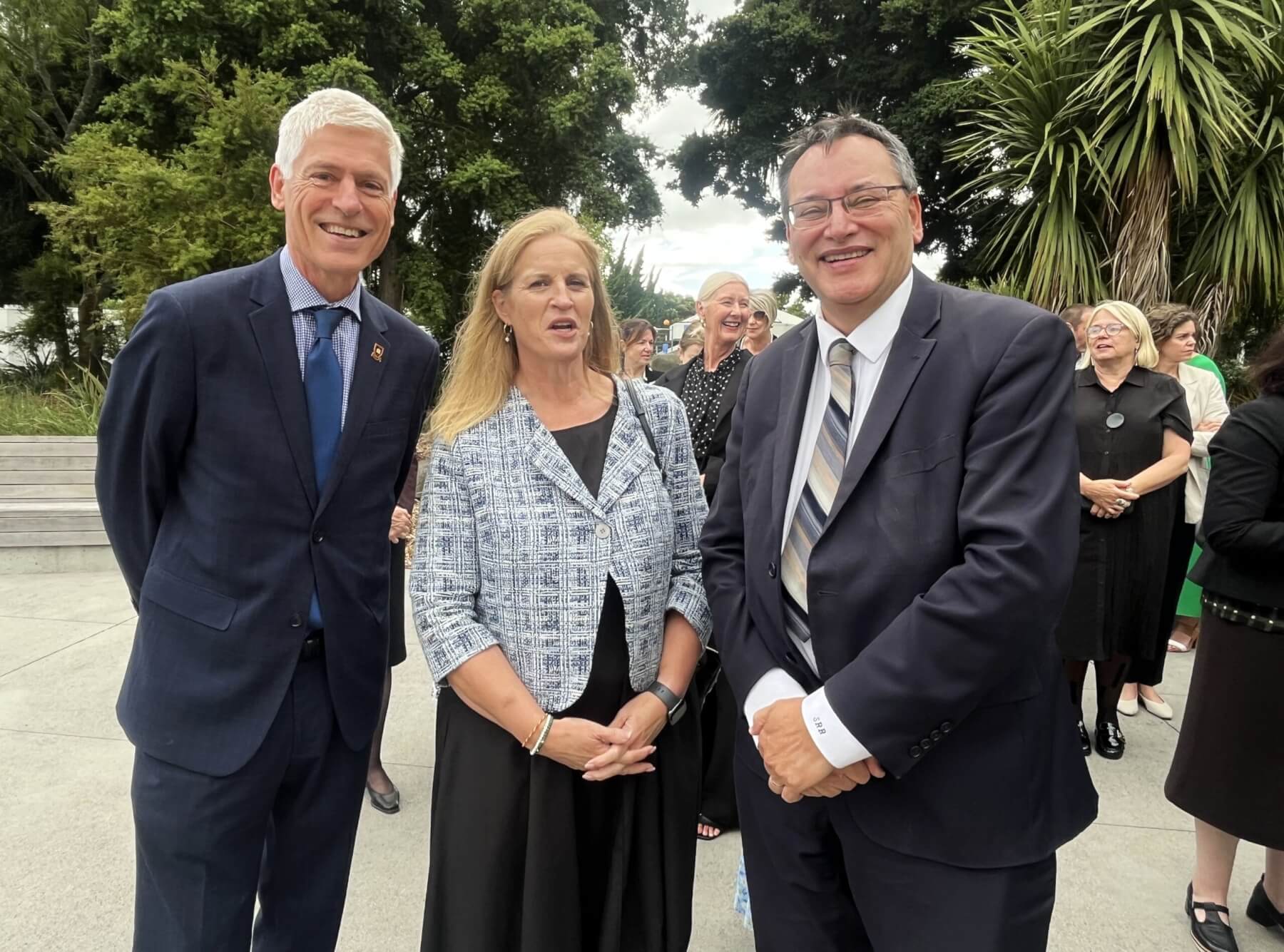
Taupo MP Louise Upston, flanked by Hamilton Mayor Tim Macindoe, left, and Universities Minister Dr Shane Reti. Photo: Viv Posselt