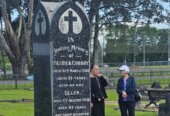


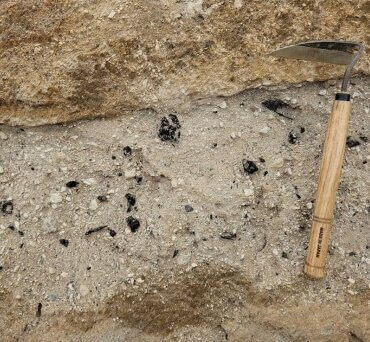
Janine Krippner looking at lahar deposits down the Whangaehu River. Photo: Brian Perttu.
There were some great questions at the Karioi talk in the Te Awamutu Library last week after a fantastic presentation by Dr Oliver McLeod. Thank you for all who came and said hello, I always love to meet those of you who enjoy this column.
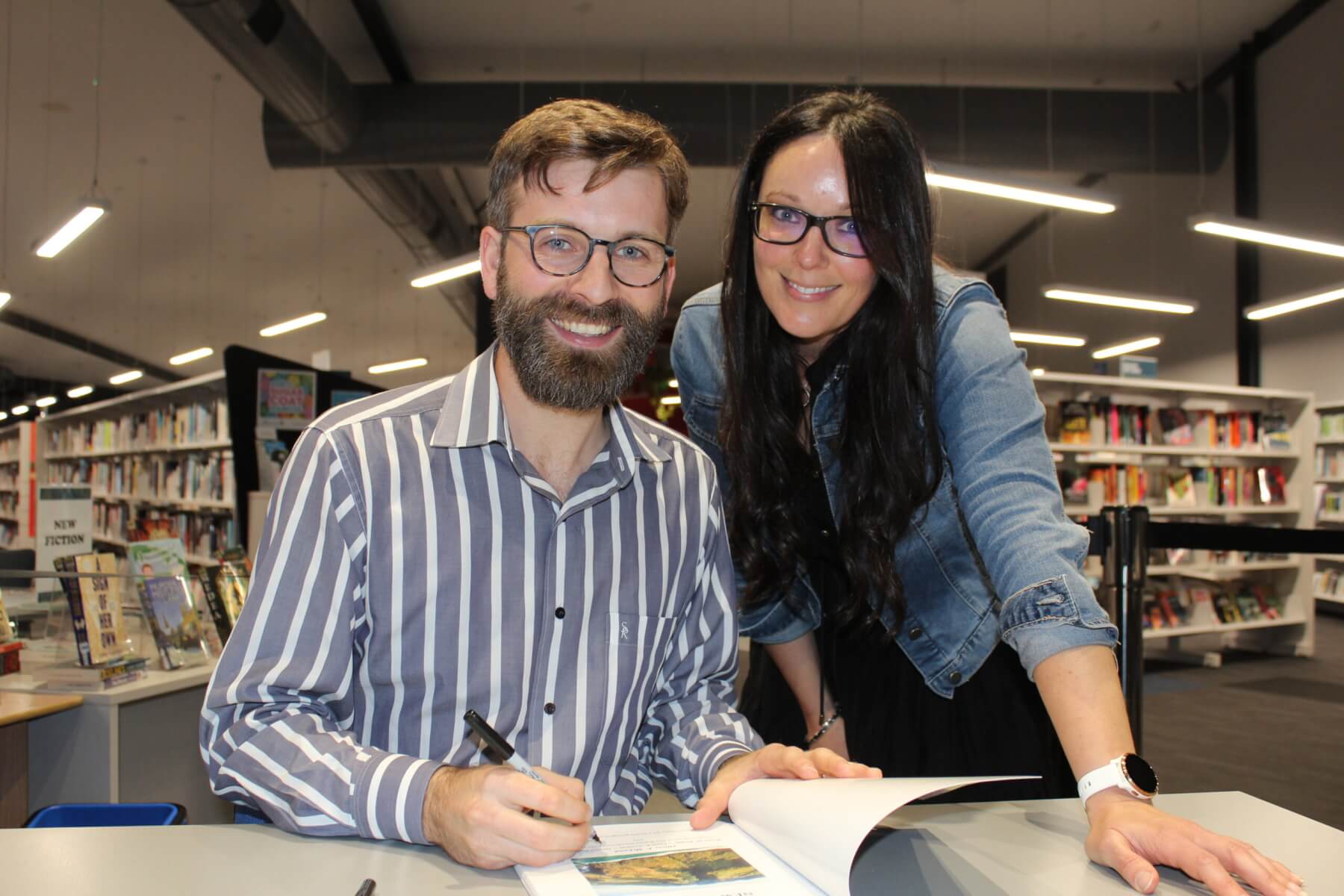
Oliver McLeod and Janine Krippner, pictured at last week’s presentation which included a book signing.
There were mentions of ‘subduction zones’, so this week we will explore what that is and why it is important for volcanoes in particular. We also happen to live above one – the Hikurangi Subduction zone, and I think it’s pretty neat understanding what’s below our feet.
Janine Krippner
Subduction zones are where two tectonic plates, the massive slabs of crust that make up the Earth’s surface, are moving together and one is pushed down below the other – it is subducted. Below the Waipā, the top of the subducting Pacific plate is very roughly 250km deep. This crust is made up of many, many layers of rocks, and those rocks are made up of many different minerals or crystals.
We have volcanoes because we have magma, a mix of molten rock with solid crystals or minerals, that moves from deep below to the surface. These huge systems are complex and evolving through time.
This is one of those times where geology requires us to think of the very large – the subducting slab, alongside the very small – the chemical makeup of the minerals within the rock.
A very important way of making magma is adding water to hot rock, lowering the temperature that is required for that rock to melt. One term for this is ‘fluid-fluxed melting’. The rock is already hot and under pressure, but it is solid. This added water is a key for making it melt. So where does that water come from? It comes from even deeper below.
Trapped within the minerals that make up the subducting slab is water, but not in the liquid form we would fill a glass with. The enormous temperatures and pressures experienced by the subducting plate causes the release of this water, which moves upwards into the hot rock above it. There are chemical processes going on through all of this, which change across different pressures and temperatures. This continues as the blebs of magma form and begin to move upwards because the now-melted rock is less dense than the solid rock – like pouring oil (lower density) into water (higher density).
Over time these magma blebs become larger magma reservoirs, mixtures of the melt plus solid chunks. Once there is enough fluid rock within the mixture, we are heading in the right direction for a possible eruption.
This is why we have a high proportion of volcanoes alongside subduction zones, and an important reason why we have volcanoes in Aotearoa. There is, of course, more complexity to our story. There are other ways of generating magma and different locations where we get volcanoes, but subduction zones are the most popular place for volcanoes to form. The outer edge of the Pacific tectonic plate has a lot of subduction zones, which is why we have the “ring of fire” with the highest concentration of active volcanoes on Earth.
The next time you see an eruption in the news, large or small, you might like to consider the long journey that the magma took to get there. The journey that began long before we were born and will continue to shape our landscapes well into the future.