

Armistice Day 2023
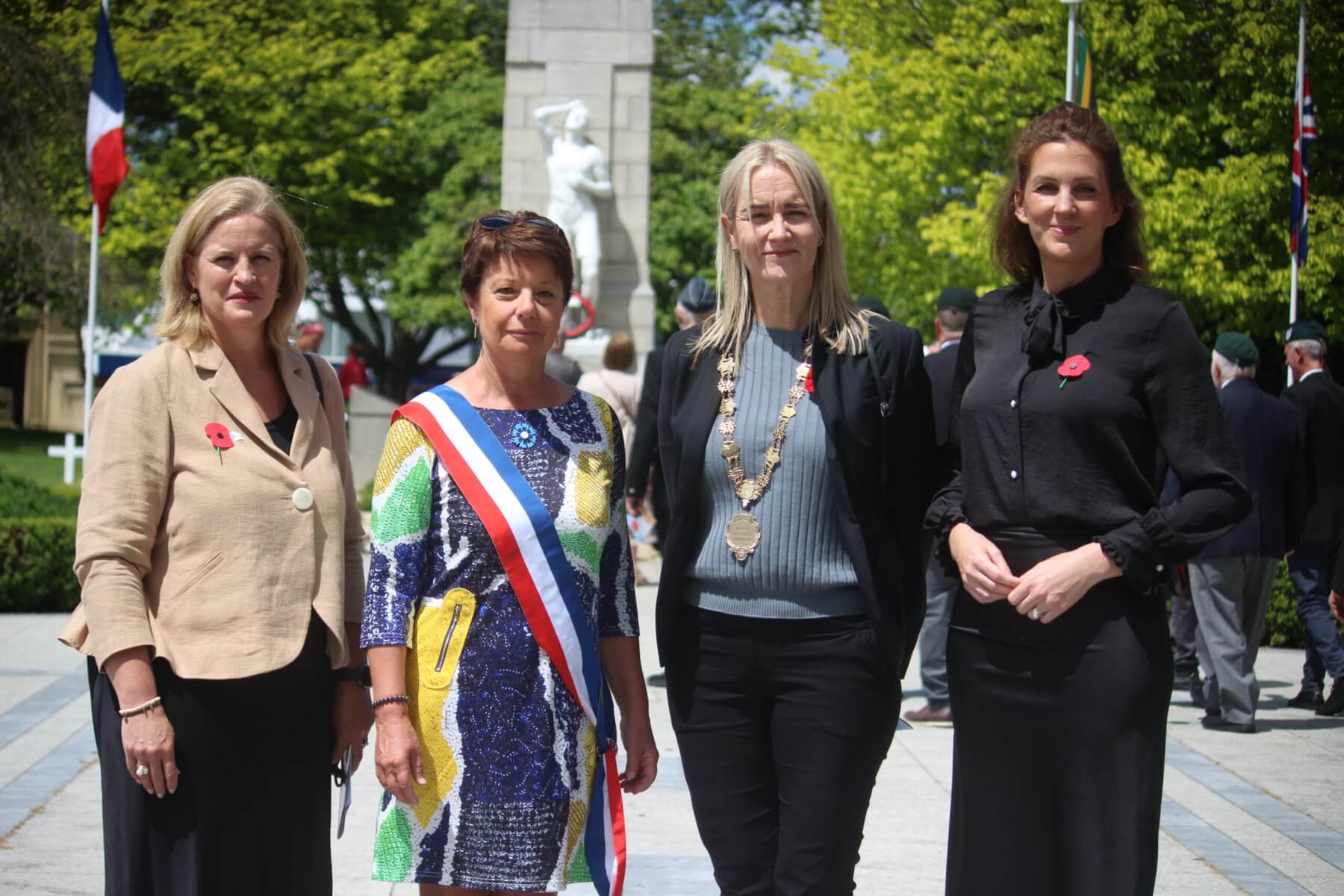
Armistice Day commemorations included speeches from, left to right, Taupō MP Louise Upston on behalf of the government, Le Quesnoy deputy mayor Axelle Declerck, Waipā mayor Susan O’Regan and Cambridge Community Board chair Jo Davies-Colley. Photo: Mary Anne Gill.
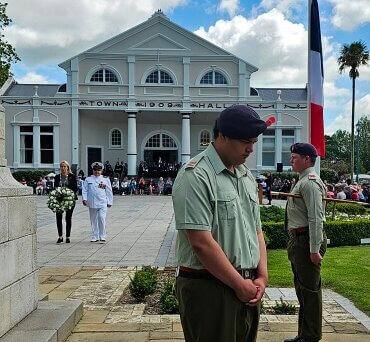
All three speakers at the Armistice Day commemorative service in Cambridge on Saturday reflected on how little the world had learned about living in peace.
Mayor Susan O’Regan said as much saying it was sobering that 105 years after Armistice Day – the 11th day, of the 11th month in 1918 signifying the end of World War 1 – “we are better at war than we are at peace.”
“What did we learn? I despair when I say I’m not sure we – as a species – have learned much at all? All over the world, sons and daughters, husbands and wives, soldiers and civilians continue to be killed or maimed by war,” she said.
Present for the service at the Town Hall was a delegation from Le Quesnoy, Cambridge’s sister city, led by the town’s deputy mayor Axelle Declerck and accompanied by Agathe Hitchon from the French Embassy in Wellington.
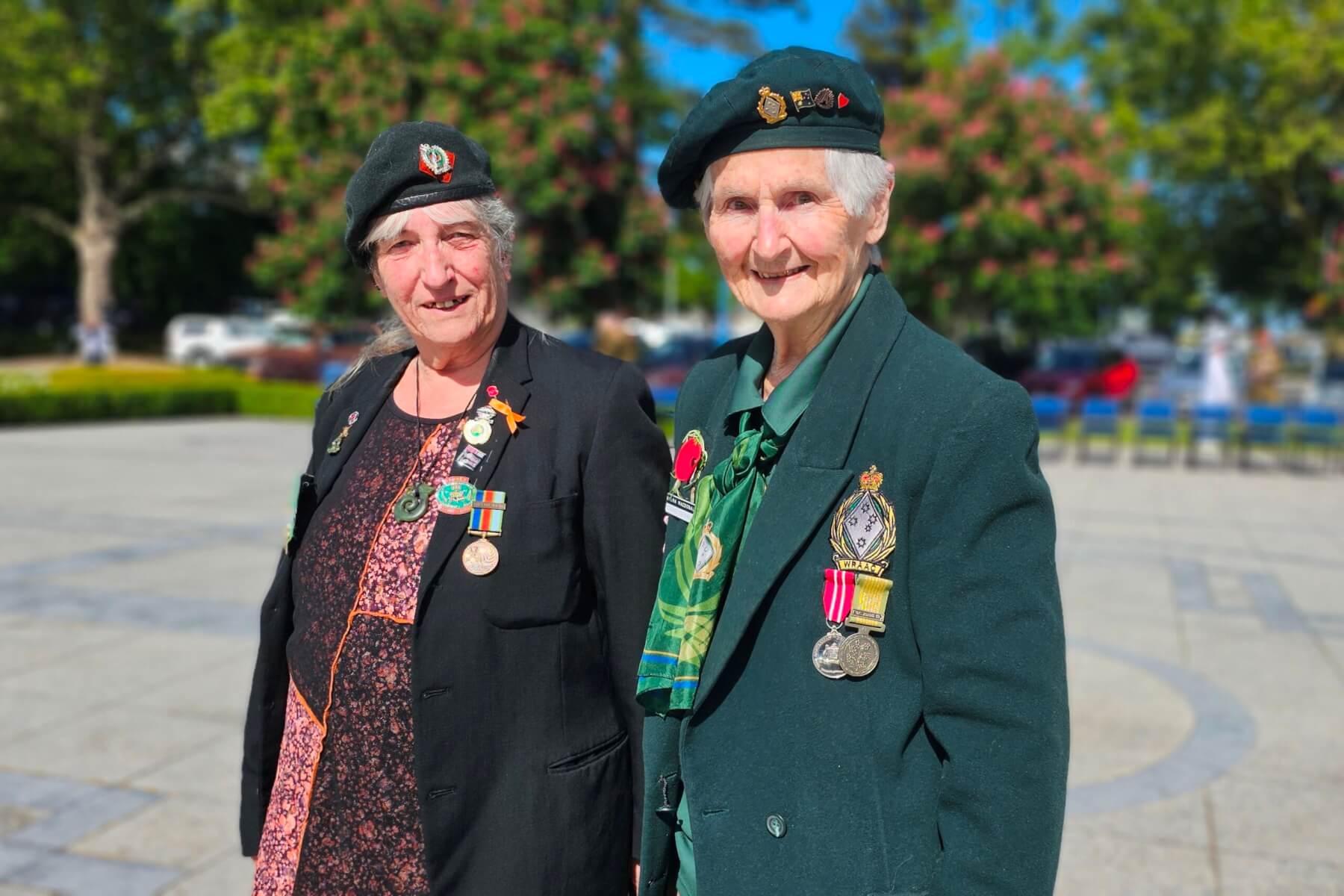
Other veterans from the Cambridge RSA represented at the Armistice Day service were left, Linda Tenamu Smith, 74, a member of the Women’s Royal Army Corps (WRAC) from 1968 to 1971 and Wilma Macdonald, 84, who was an Australian WRAC from 1958 to 1962 before marrying a New Zealander and settling in Cambridge.
Taupō MP Louise Upston, speaking on behalf of the government, said conflicts in Russia, Ukraine, Israel had sent shock waves around the globe.
“World War I was supposed to be the ‘war to end all wars’,” she said.
“Some of the fittest and healthiest in the prime of youth – hope for their countries’ futures – will not grow old. Others will grow old prematurely – scarred physically and emotionally for life. It is an unconscionable waste and one that governments and militant factions around the world should make every effort to avoid.
“Peace is often built on understanding. Understanding is built on communication. Sister cities are a great way to grow understanding between cultures.”
Through an interpreter Declerck said her town still remembers the butchery of World War I and the role New Zealand played in its history.
New Zealand was so far away “but you came to us to fight for freedom, and we will always be grateful for that.”
Le Quesnoy had done its best to keep this memory alive by honouring the New Zealand soldiers who liberated the town on November 4, 1918, with no loss of civilian or soldiers’ lives. Te Arawhata – the New Zealand Liberation Museum – opened last month and provided an opportunity for the world to understand what New Zealand did, said Declerck.
The Le Quesnoy delegation was welcomed to Cambridge the previous night at a small function in the Town Hall hosted by the Cambridge-Le Quesnoy Friendship Association and the Cambridge Community Board.
It was also honoured at a dinner on Saturday night at the Don Rowlands Centre, Karāpiro.
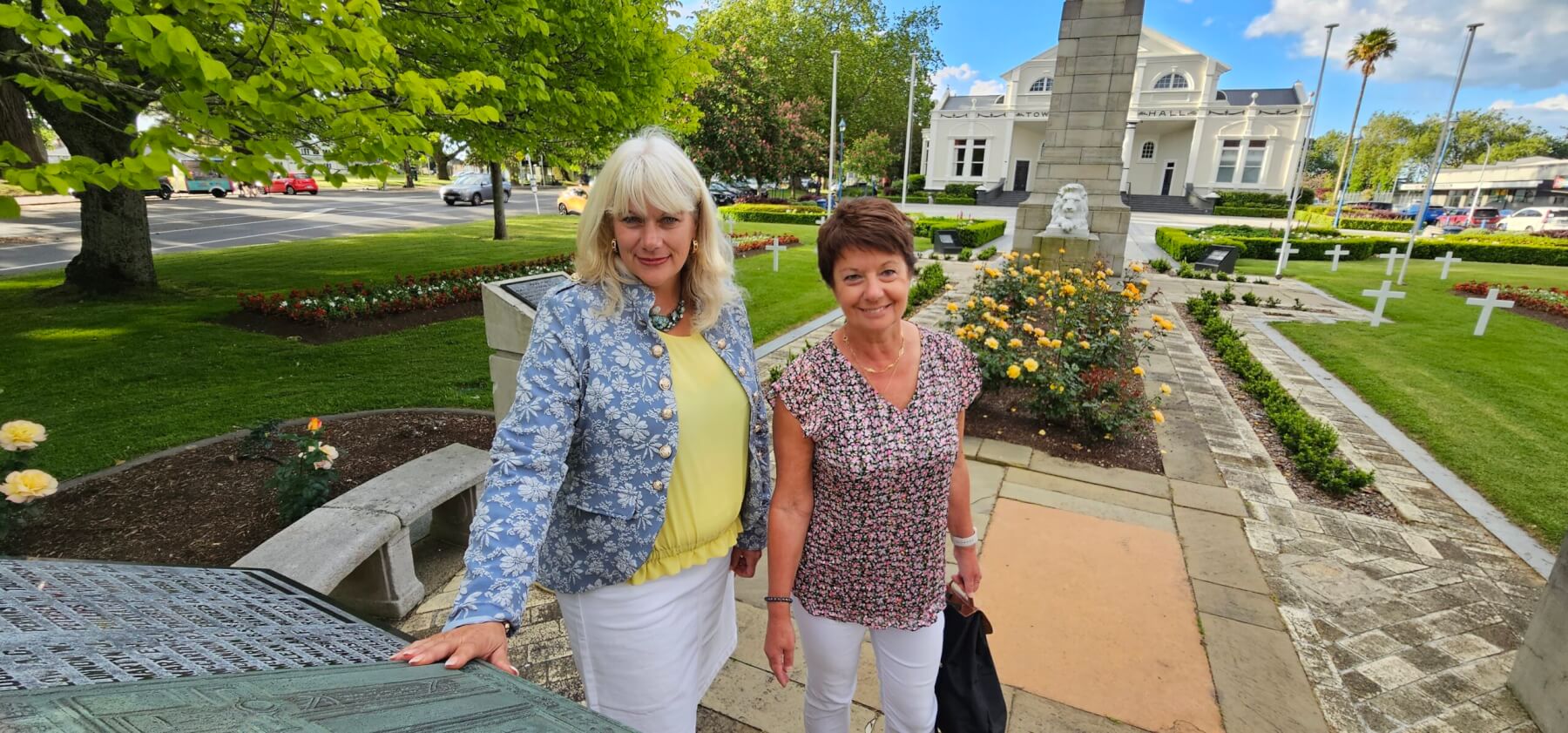
Deputy mayors of Waipā and Le Quesnoy, Liz Stolwyk and Axelle Declerck, in the Jubilee Gardens in front of the Cambridge Cenotaph and outside the Town Hall look over the World War I memorial roll.
An Armistice Salute concert by the Cambridge Brass Band – many of its members were in Le Quesnoy four years ago for the centennial commemorations – featured The Liberation of Le Quesnoy. The composition by composer and conductor Dwayne Bloomfield visibly affected the French visitors.
Evidence that youth are among those wanting to remember what their ancestors did for them on foreign fields came with a moving version of Amazing Grace played on the bagpipes by band member Hunter Moir, 16, of Hillcrest High School.
Accompanying him on the bass drum was veteran band member Chris Reynolds whose has tenuous links with France courtesy of his birth place of Elba, the Mediterranean island where French military commander Napoleon Bonaparte was exiled for 10 months until February 1815.
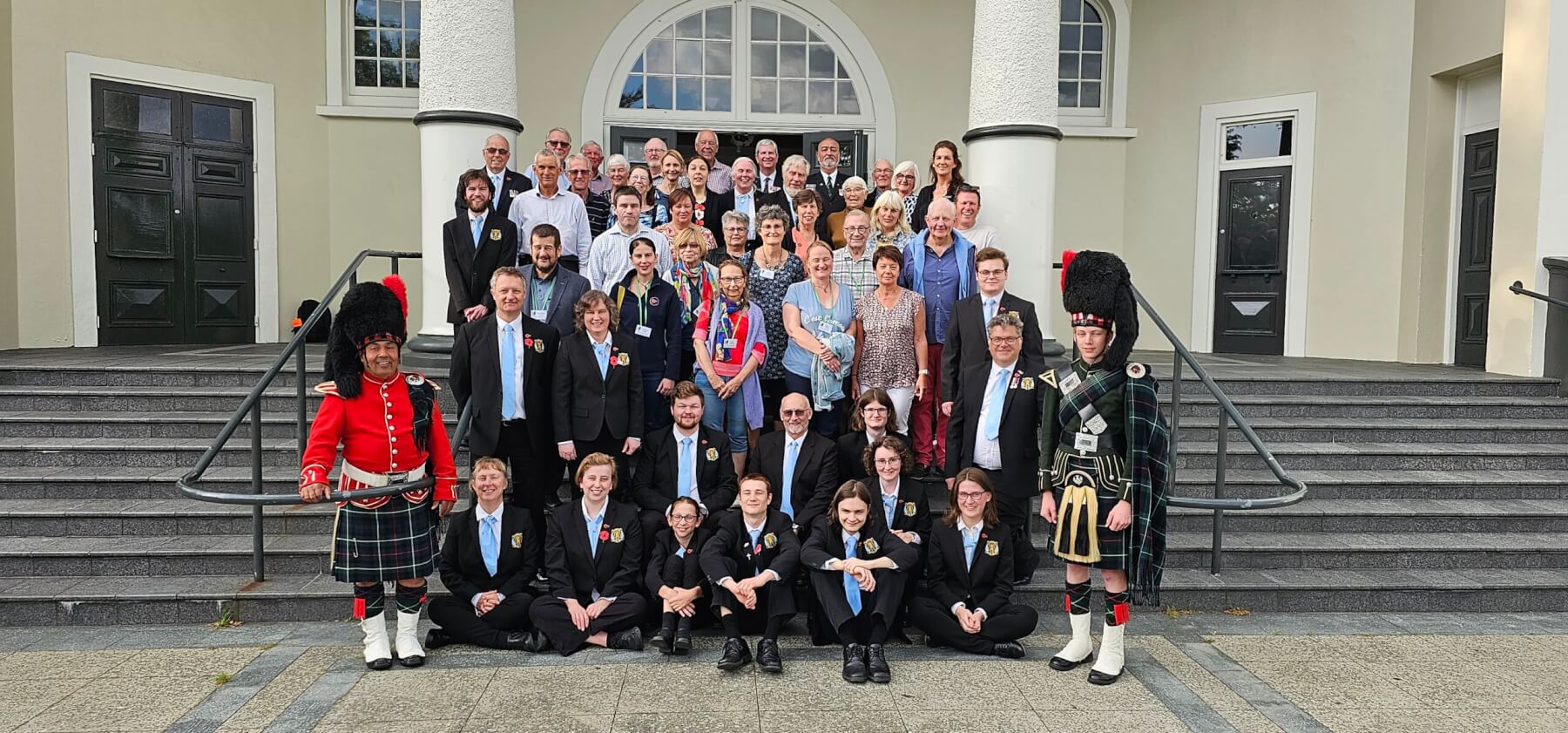
The Le Quesnoy delegation on the Cambridge Town Hall steps with members of the Cambridge-Le Quesnoy Friendship Association, Waipā District Council, the Cambridge Community Board and Cambridge Brass Band. Featured at front, left, bass drummer Chris Reynolds, who was born on Saint Helena where French military commander Napoleon Bonaparte was exiled and right, Hunter Moir, 16, of Hillcrest High School who played the bagpipes as the Armistice concert.
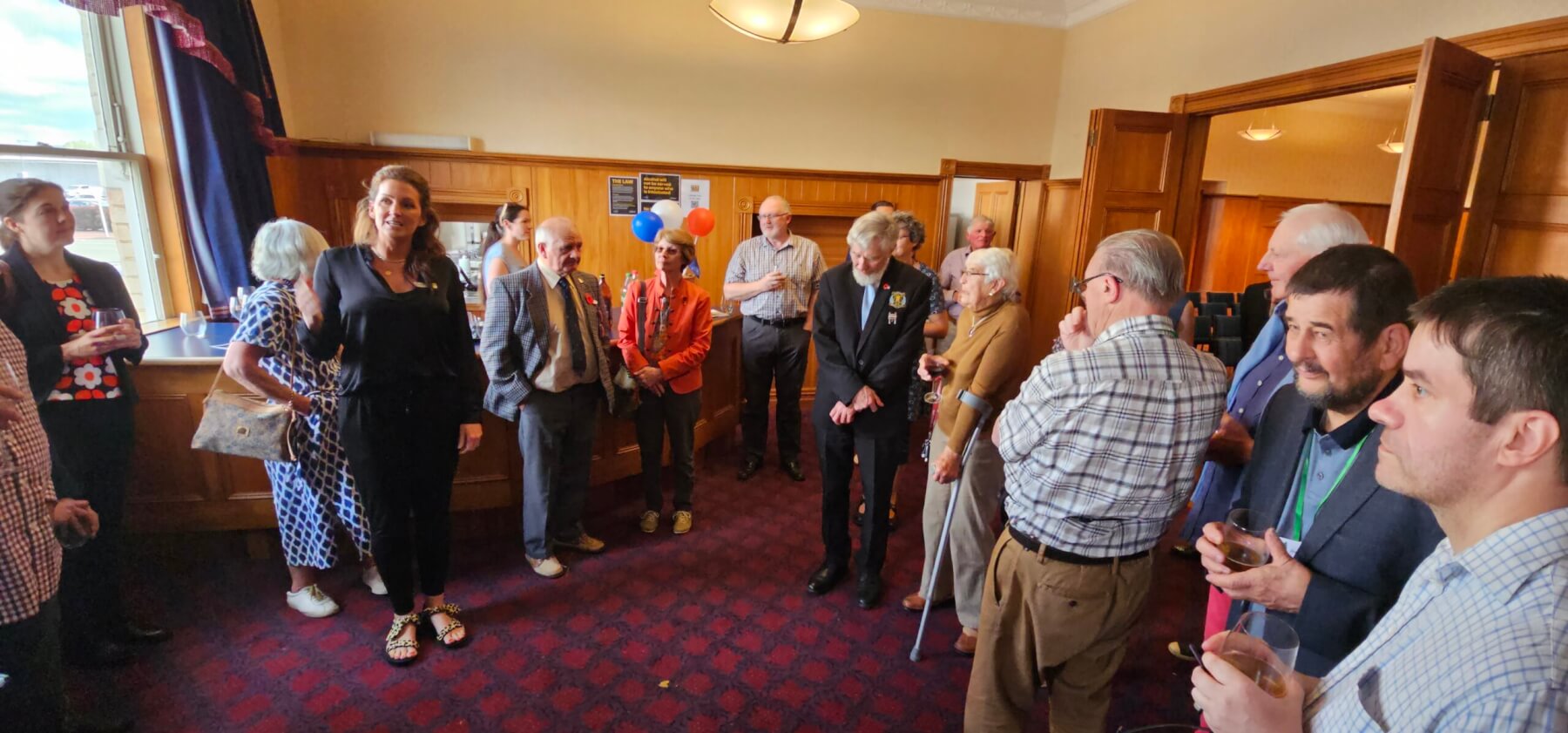
Le Quesnoy Delegation in Cambridge welcomed to the Town Hall by Community Board chair Jo Davies-Colley
Cambridge-Le Quesnoy Friendship Association chair Alana MacKay said welcoming the French delegation was one of two highlights for her this month.
She is also on the community board which manages the sister city relationships between Le Quesnoy and Bihoro, Japan. A delegation from the Hokkaido town arrives next week and is interested in learning about Waipā’s farming methods, healthcare and education.
They will be welcomed by the Cambridge Primary School kapa haka group in the Japanese Garden next to the library on Tuesday.
-
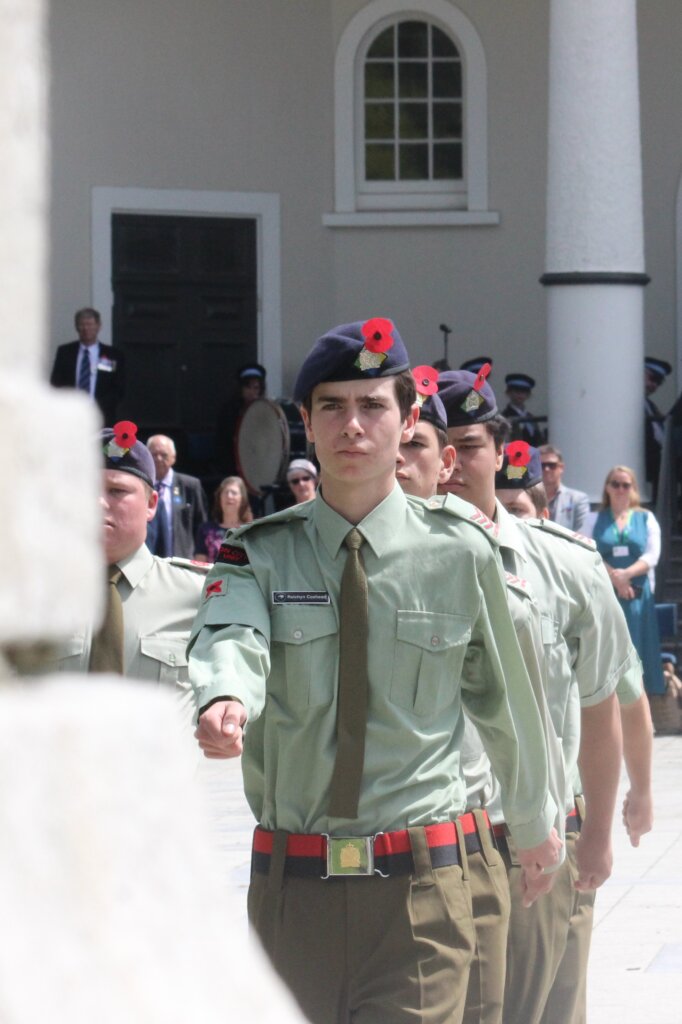
- Hamilton Cadet Unit
-
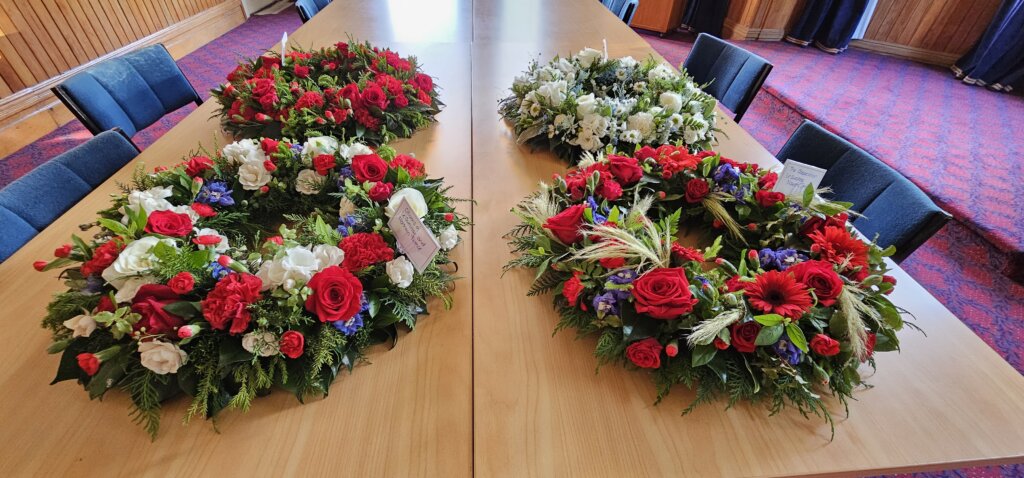
- The wreaths ready for laying
-
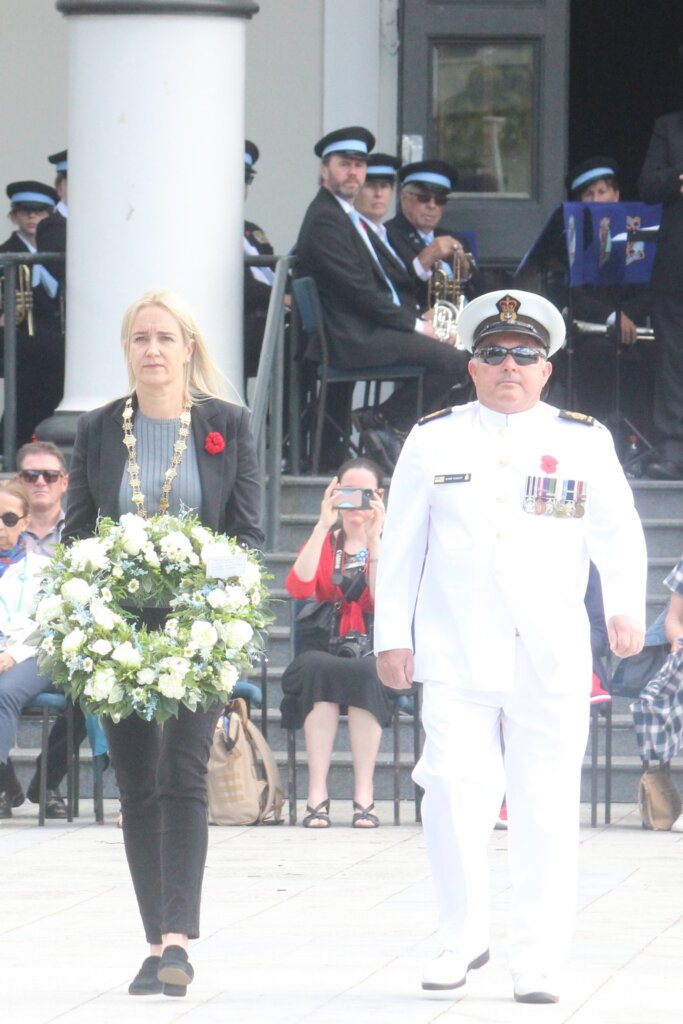
- Mayor Susan O’Regan with the wreath from Waipa.
-
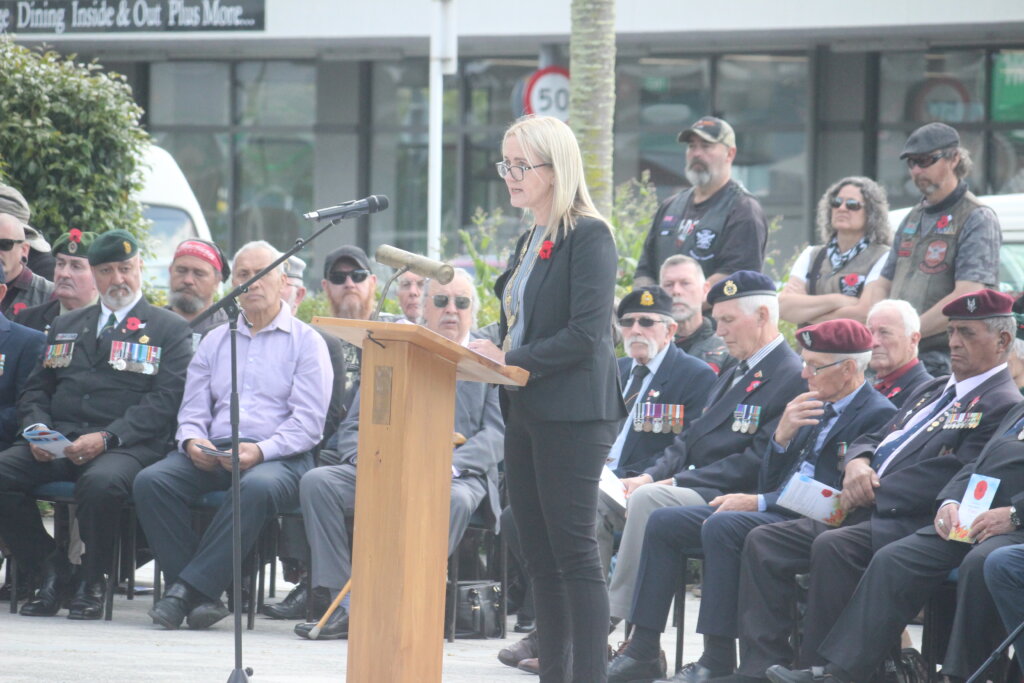
- Mayor Susan O’Regan speaks
-
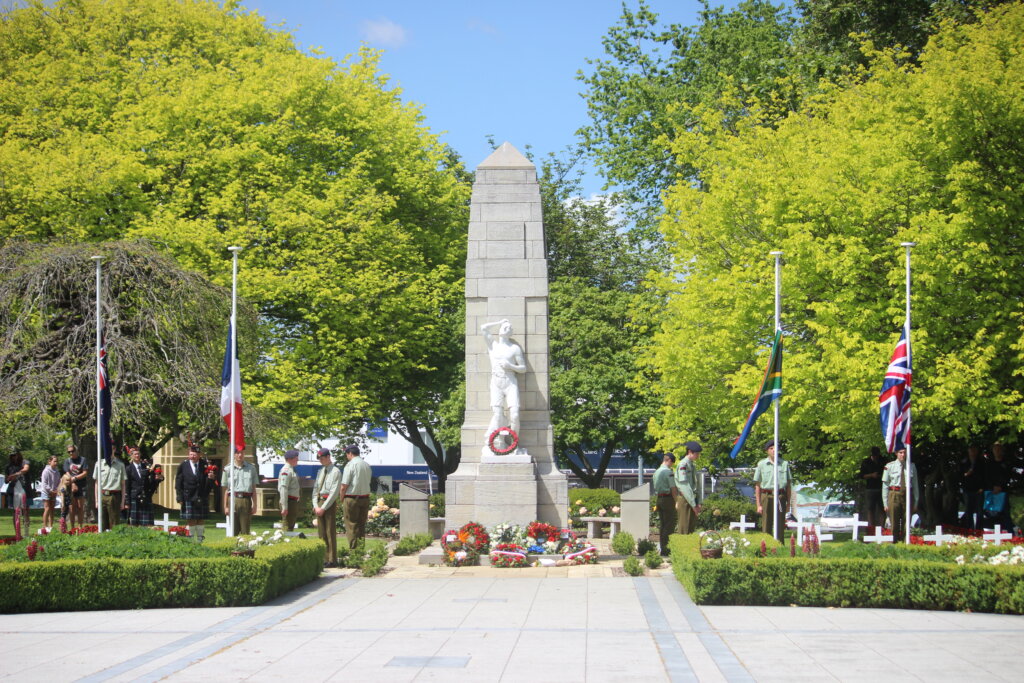
- Armistice Day 2023
-
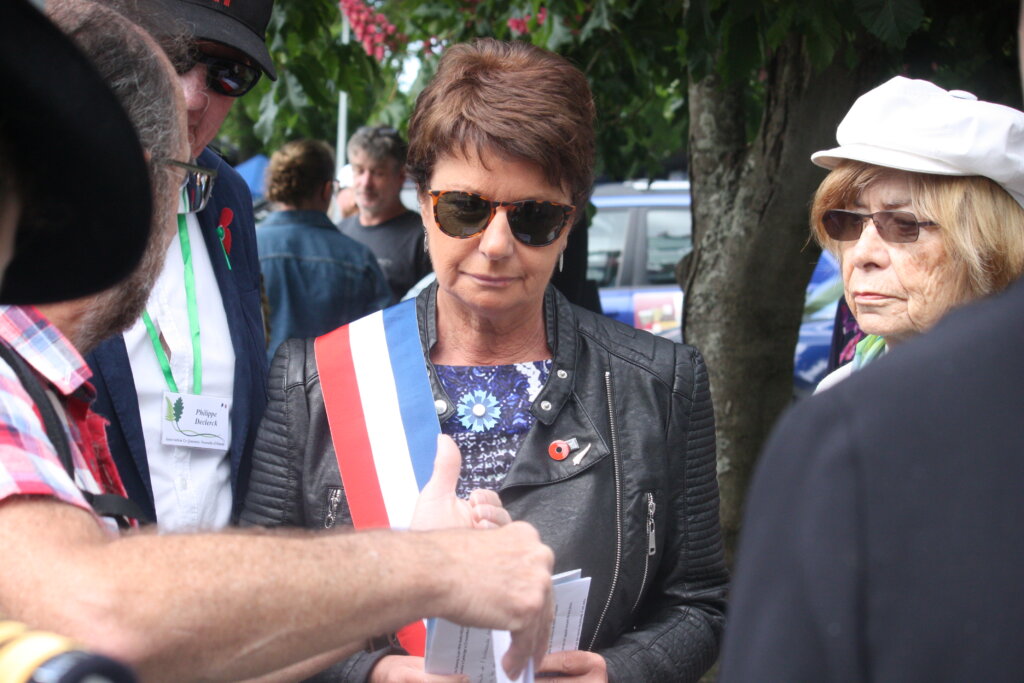
- Le Quesnoy deputy mayor Axelle Declerck
-
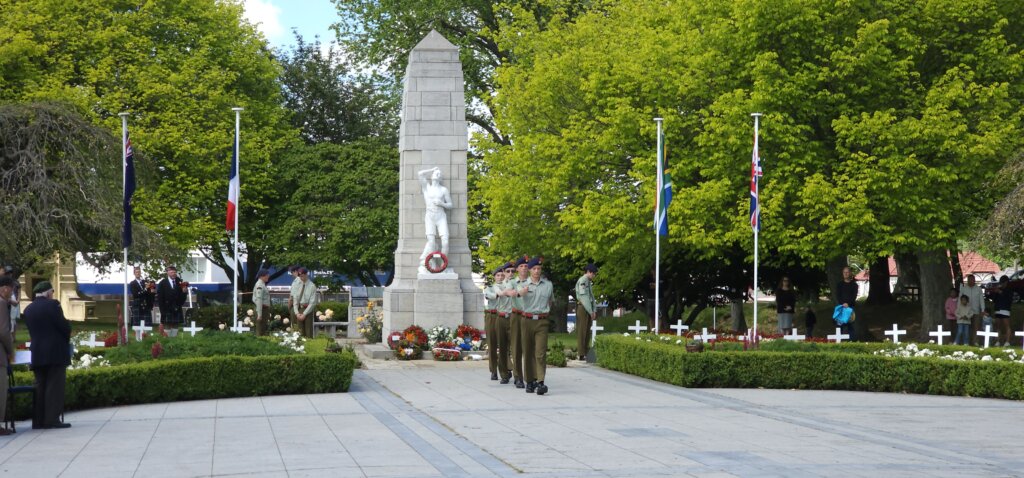
- Hamilton Cadet Unit
-
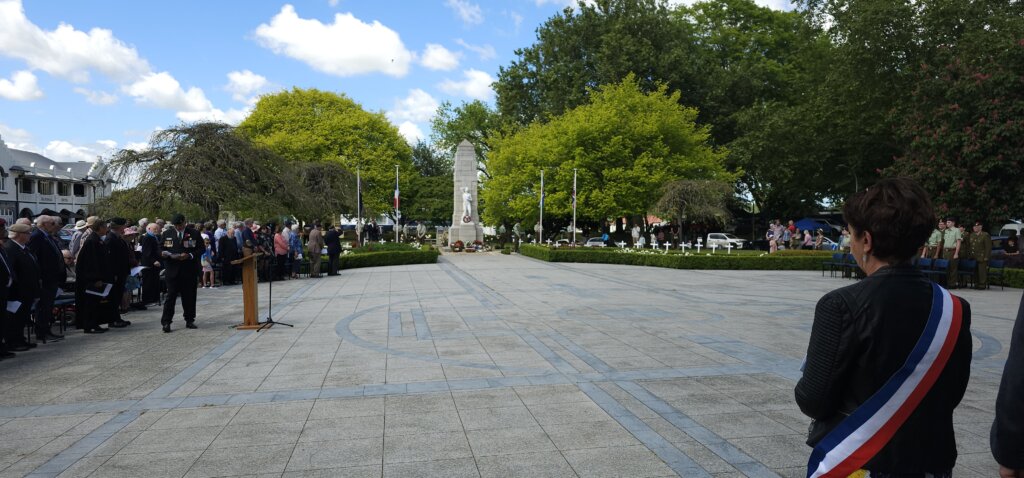
- Armistice Day 2023
-
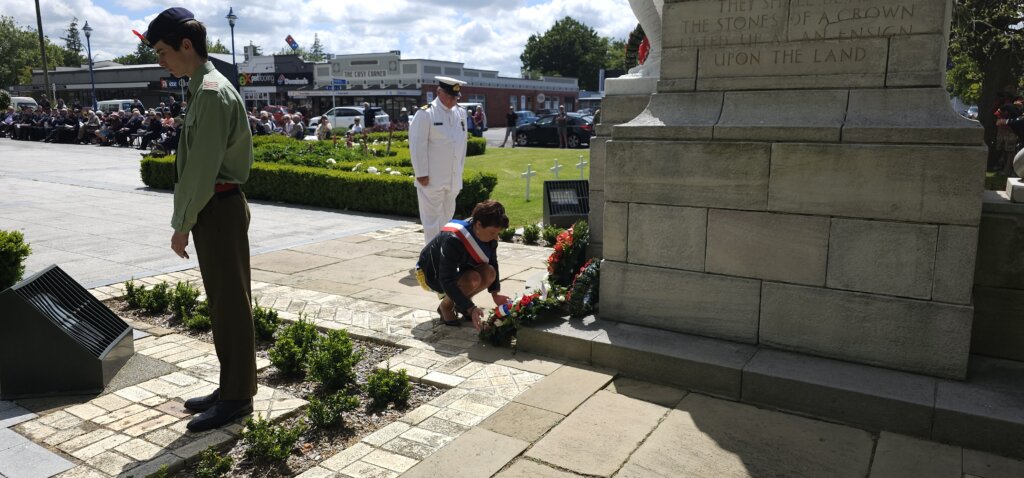
- Le Quesnoy deputy mayor Axelle Declerck lays a wreath
-
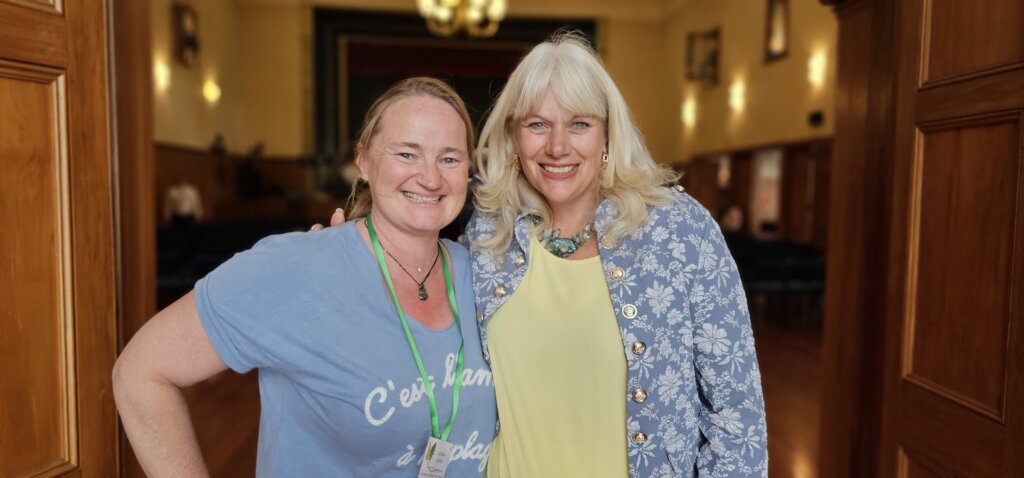
- Waipa deputy mayor Liz Stolwyk with Le Quesnoy cultural coordinator Hélène Lebon
-
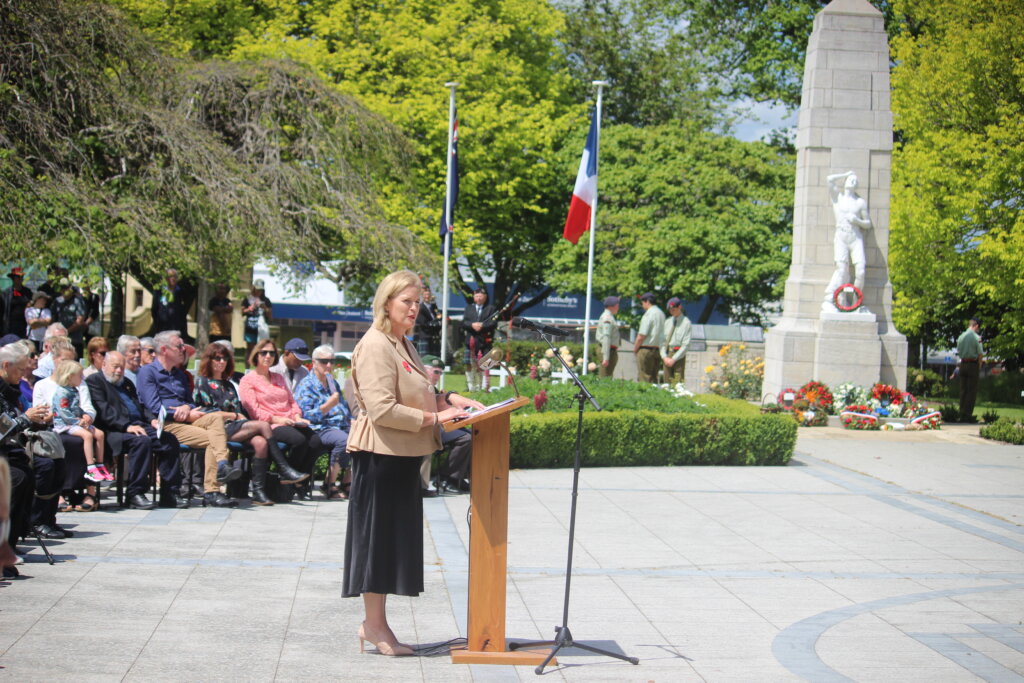
- Taupō MP Louise Upston on behalf of the government
-
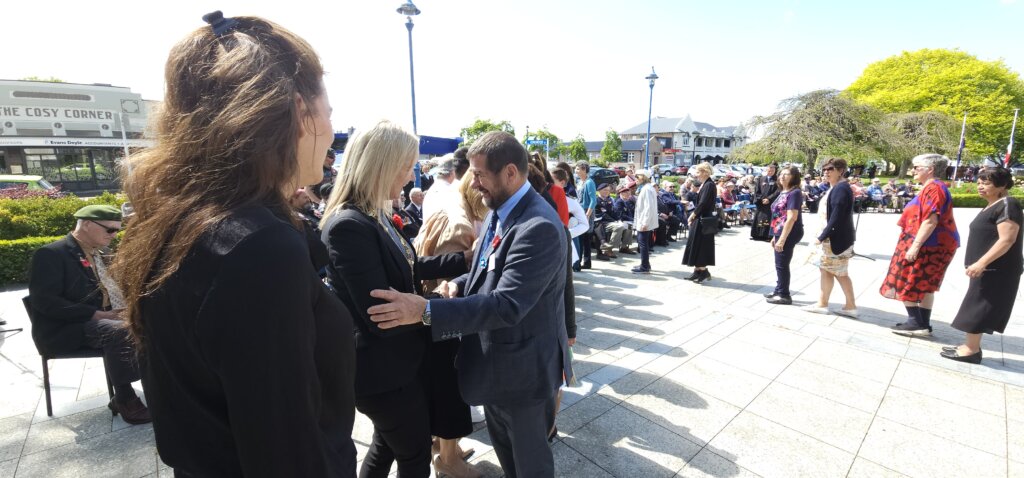
- Mayor Susan O’Regan welcomes Jean-Philippe Froment of the Le Quesnoy delegation.
-
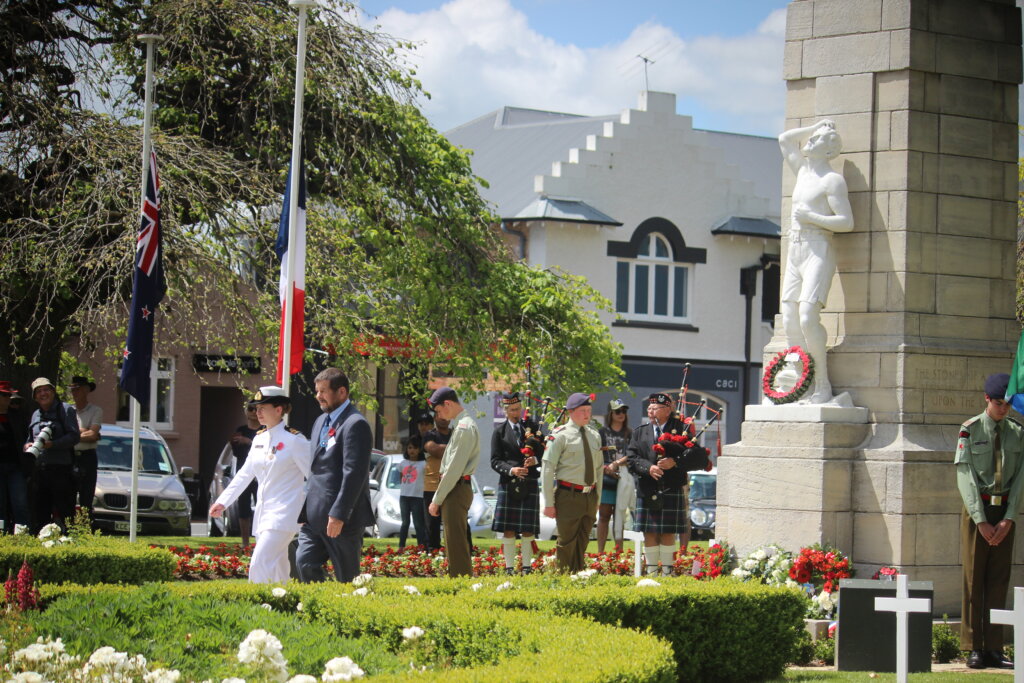
- Le Quesnoy delegate Jean-Philippe Froment returns from laying a wreath.
-
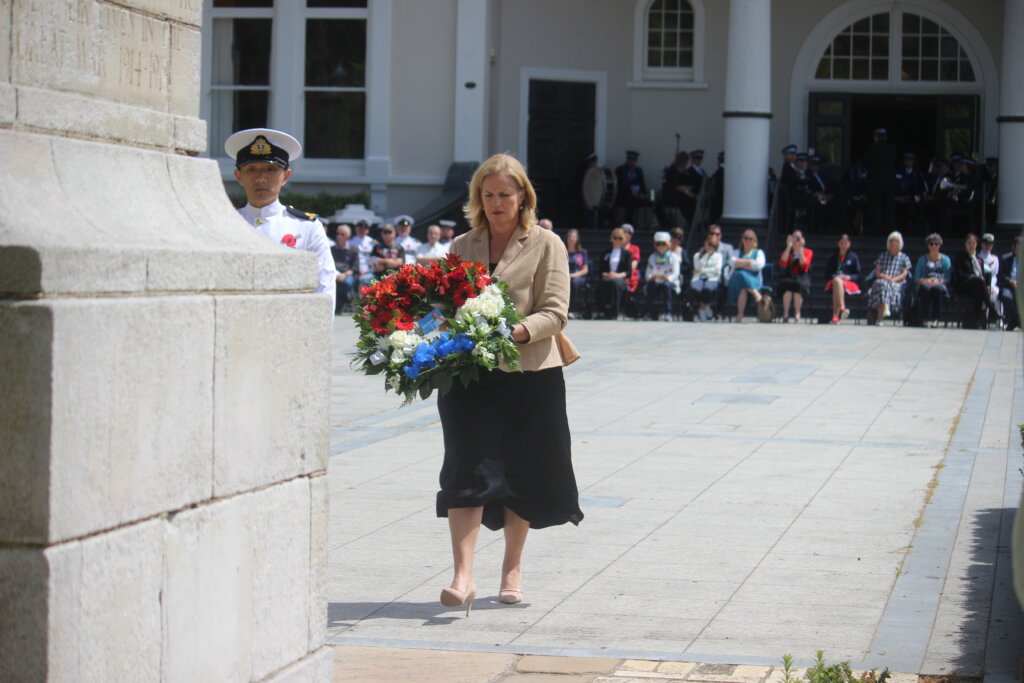
- Taupō MP Louise Upston lays a wreath.
-
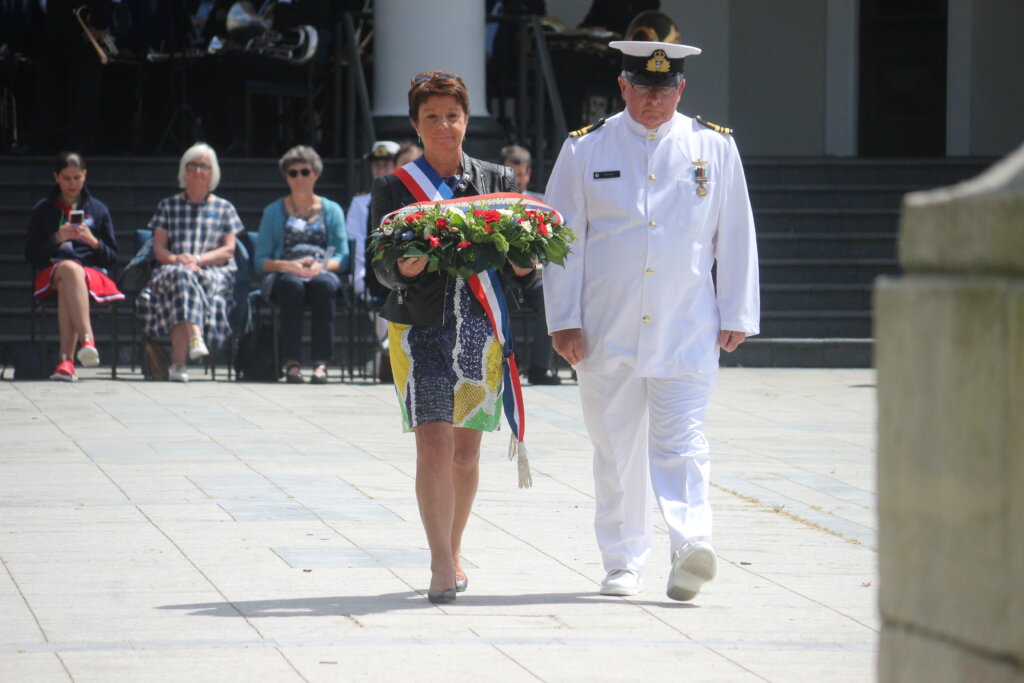
- Le Quesnoy deputy mayor Axelle Declerck lays a wreath.
-
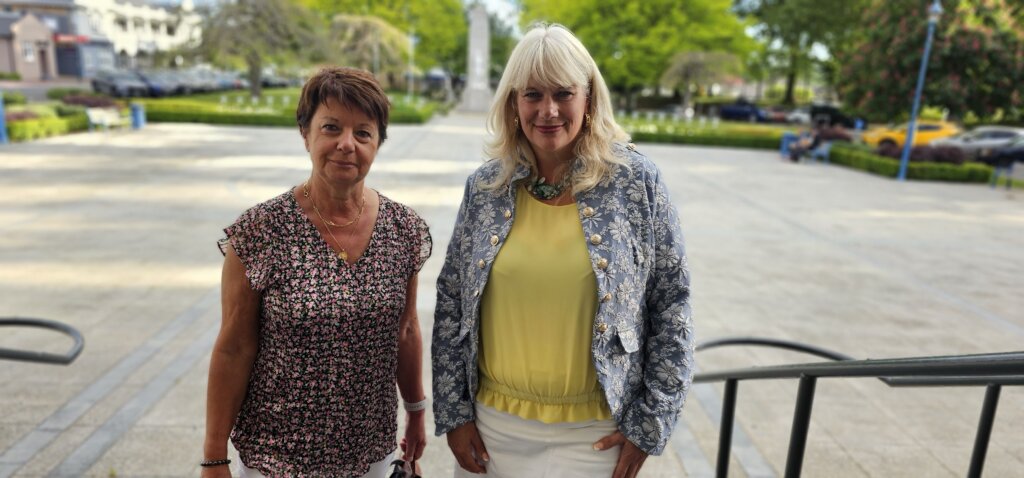
- Deputy mayors of Waipā and Le Quesnoy, Liz Stolwyk and Axelle Declerck, outside the Town Hall.
-
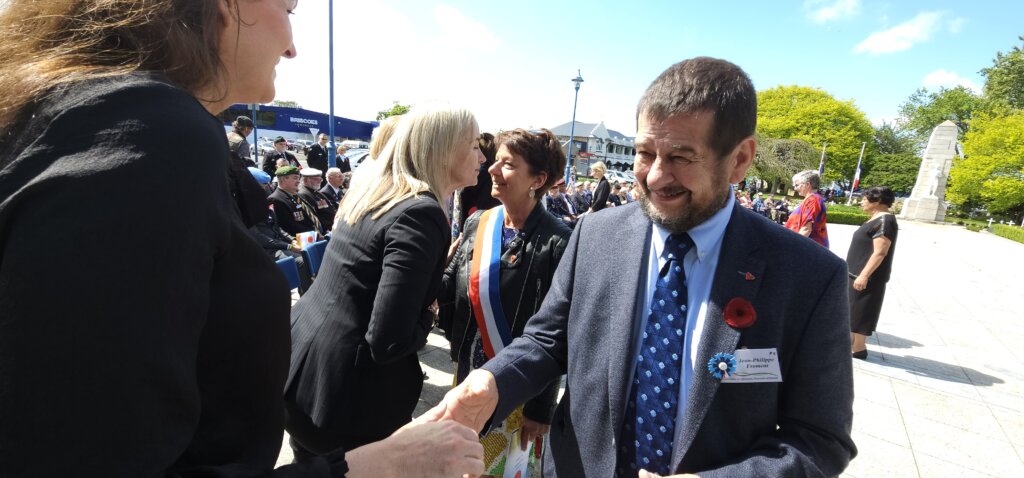
- Cambridge Community Board chair Jo Davies-Colley welcomes Jean-Philippe Froment of the Le Quesnoy delegation.
-
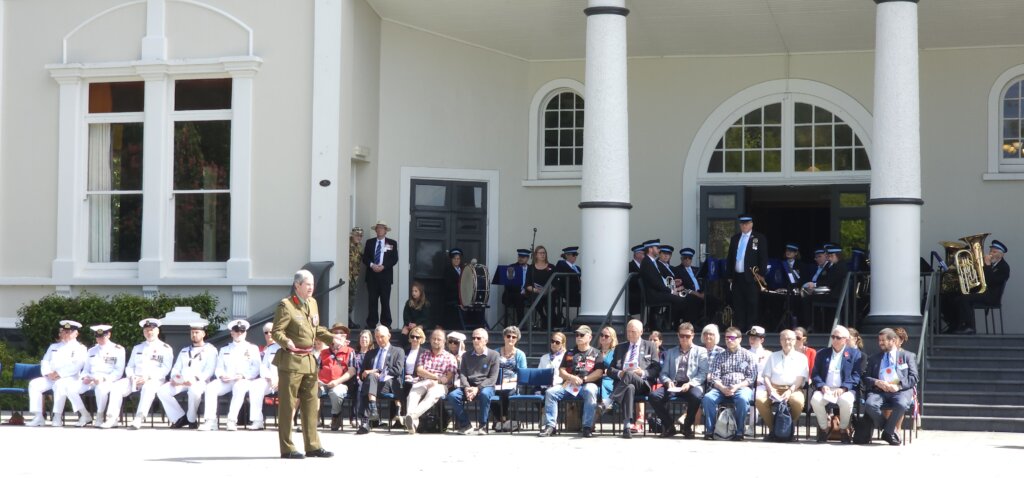
- Brigadier Jon Broadley
-
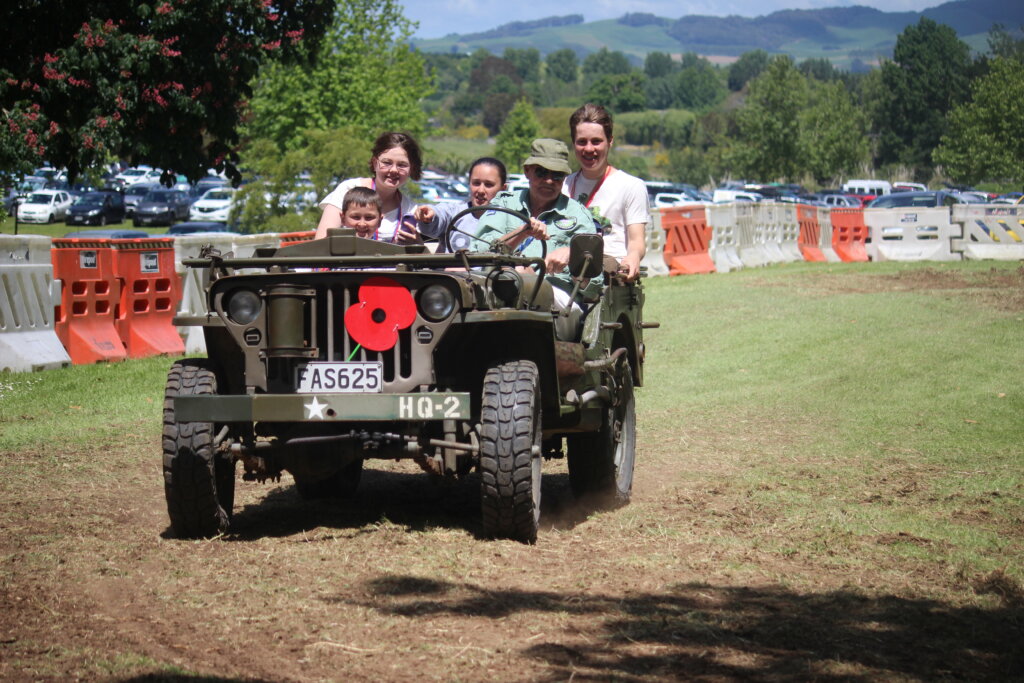
- Jeep rides were a crowd favourite at the Armistice in Cambridge event at Lake Karāpiro. This jeep honoured veteran Major Robert Yates who served in the New Zealand during World War II, retired from the army in 1968 and died aged 80 in 2002.
-
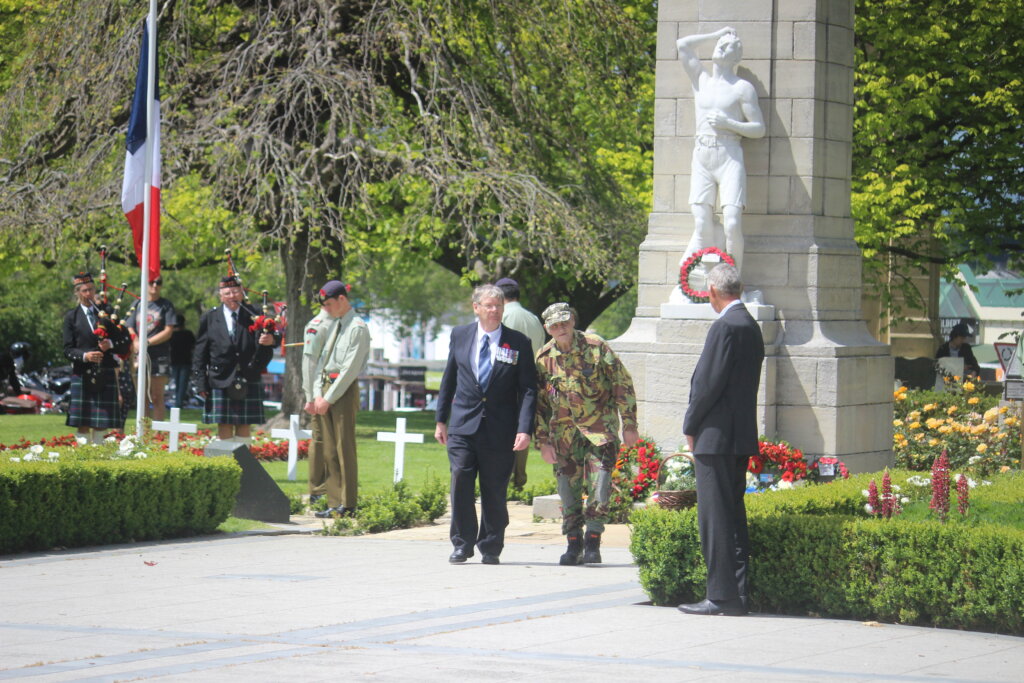
- Cambridge RSA stalwart Paul Murphy, left, and resident Robert Phillips after laying a wreath at the Cenotaph during the Armistice Day service in 2023.