

Via Carla Nunziata under CC
Introducing a new columnist. Tom Roa is Te Mata Ahurangi – Tikanga Advisor – at Waikato university. Dr Roa is a former Chair of Te Arataura, Waikato Tainui’s Executive, and a Ngāti Maniapoto kaumatua. His column is titled He Whakawhitiwhitinga Whakaaro – which translates from te reo into English as “sharing some thinking”.
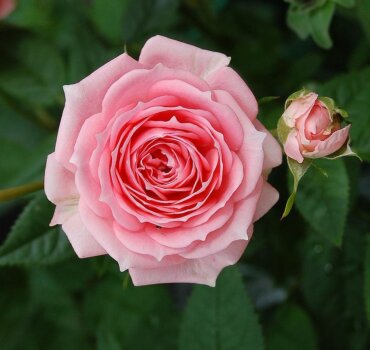
What’s in a name? ‘That which we call a rose. By any other name would smell as sweet.’ Shakespeare in his play Romeo and Juliet appeared to be suggesting that a name is nothing but a name. That names themselves do not hold worth nor meaning. They simply act as labels to distinguish one thing or person from another.
Sorry Mr Shakespeare! There is something more to this ‘name’ thing.
There is another English proverb that says ‘Sticks and stones may break my bones but names will never hurt me!’
This is directly opposite to the Māori proverb, ‘He tao rākau e taea te karo; He tao kupu e kore e taea te karo.’ An attack with a weapon can be easily parried. An attack of words cannot be so easily pushed aside.
The pen, Mr Shakespeare, is mightier than the sword.
The word/name ‘Pākehā’ has met with some controversy. The first humans in Aotearoa were Polynesian who later called themselves Māori. In their migration from Polynesia some termed themselves ‘iwi moana’ – ‘people of the sea’. In settling this larger land mass they called themselves ‘tangata whenua’ – ‘people of the land’. The signatories to the Treaty of Waitangi were the ‘rangatira’, the leaders of the ‘tangata whenua’ and the representative of the Crown of England, a primary mechanism by which those who came to settle this land had gained the permission of the people of the land – ‘tangata whenua’ – to settle here. Many were called ‘Pākehā’. Some came to the belief that the term was not complimentary. A significant number of them assert that they have been part and parcel of this land for five, six, even seven generations – and they are not Māori, but have become people of this land. They have a point! The Chief Judge of the Waitangi Tribunal Sir Taihākurei Durie, elegantly suggested a new term, ‘tāngata tiriti’ – people of the Treaty.
There is more to a name, than just the name itself. Labels are important. My everyday name is Tom (sometimes Tame) Roa. I am named for my father’s favourite uncle, his father’s brother, Tame (sometimes Tom) Roa. The word ‘tame’ is another word for ‘male’. So a male pig is called a ‘tame poaka’, a rooster is a ‘tame heihei’. I take pride in carrying that name.
Just north of Te Awamutu is the lake we know today as ‘Ngāroto’. A ‘roto’ is a lake. The plural, lakes, in Māori, is ‘ngā roto’. The region in pre-European times was dotted as it is today with a number of lakes, hence the name ‘Ngā Roto’, but the present Lake Ngāroto was much greater in area and volume of water than it is today. Streams were blocked in order to form an artificial lake where Ngāti Apakura and their fellow hapū/iwi including Ngāti Hikairo and Ngāti Paretekawa amongst others, farmed the fresh water tuna (eels) and pārera (ducks), enjoying a reputation for aquaculture and agriculture. On this vast artificial lake they also built floating island pā. The region was named ‘Ngā Roto’ for the lakes, but the largest now known as Ngāroto was called ‘Wai Roto’.
I congratulate the News editorial decision to use Ngā Roto instead of its past usage of Ngaroto.
There is indeed something in a name.