
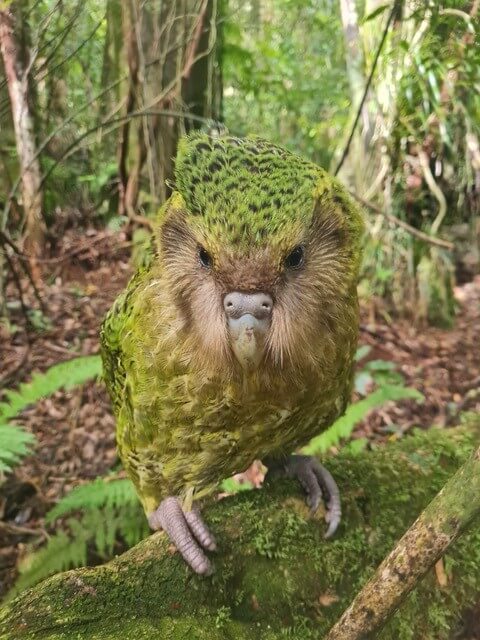
Māhutonga – pictured after his health check. Photo: Department of Conservation.
Some of Waipa’s newest residents are settling in just fine.
A month after Bunker, Ōtepoti, Motupōhue and Māhutonga made history by becoming the first kākāpō to live on the mainland in almost 40 years, Department of Conservation Operations Manager for Kākāpō Deidre Vercoe is reporting all is well.
“The four young males have settled into their new Sanctuary Mountain Maungatautari habitat just as we had hoped. This is great news for the programme because it means we can begin to prepare for another small group of male kākāpō to join them,” she told The News this week.
To best monitor the birds without disturbing them, they are each wearing a backpack-style transmitter and GPS unit to track their location and activity levels remotely.
“From this data we learned that following their long journey from Whenua Hou, Motupōhue was the first bird ready to start exploring after just a brief spot of R&R. Bunker, Ōtepoti and Māhutonga took a more measured approach and remained close to their release sites for the first few days before venturing into their new surrounds.
“One month on, we can see that after some serious initial exploration of the maunga, all four have settled into separate but consistent locations, which may well become their more permanent home ranges.”
Each of the birds received a ‘one month mark’ health check by Doc’s kākāpō rangers and Sanctuary Mountain Maungatautari biodiversity rangers last week.
“They were all found in good condition with a small percentage of weight loss which was well within the range we were expecting at this stage,” Vercoe said.
Samples were also collected that will provide insight into their preferred diet in their new habitat.
“This information, along with transmitter and GPS data, helps us learn how the birds are adapting, and if they can thrive in this new environment.
“We are happy with how the translocation is going so far but it’s still early days. It could be years before we really understand how suitable the habitat is for kākāpō. Until then, the birds will continue to be closely monitored and provide us with key information to help support the future of their species.”